In late June 2026, my 50th birthday celebrations were put on hold as my partner Amanda’s parents decided on an extended trip to Europe, perhaps their last, for which I was volunteered to chauffeur us around Northern Italy for 2 weeks during one of the most intense heatwaves since the week I was born.
Her mum was determined to see all cinque of the Cinque Terre villages and some of Milan’s popular tourist sites. Her dad came along for the ride, perhaps more interested in table tennis videos and political clickbait on his iPad than the historical sites, and continuously wondering why there was only Italian food when Singapore, his home-country, had much more variety (The Three Amigos anyone?).
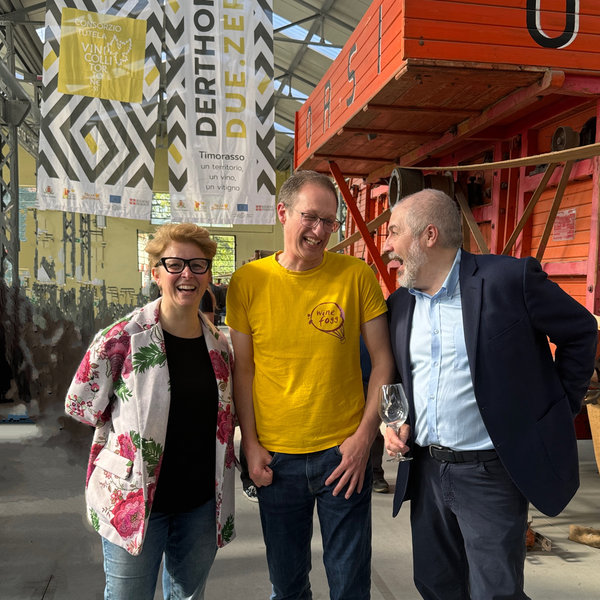
With two weeks to fill, my only stipulation was that we start with a few days in Tortona, home of my favourite grape: Timorasso, the grape and region that spurred me to start writing about wine.
I would set myself ad-hoc side missions to seek out lesser-known native grapes along the way.
The Itinerary:
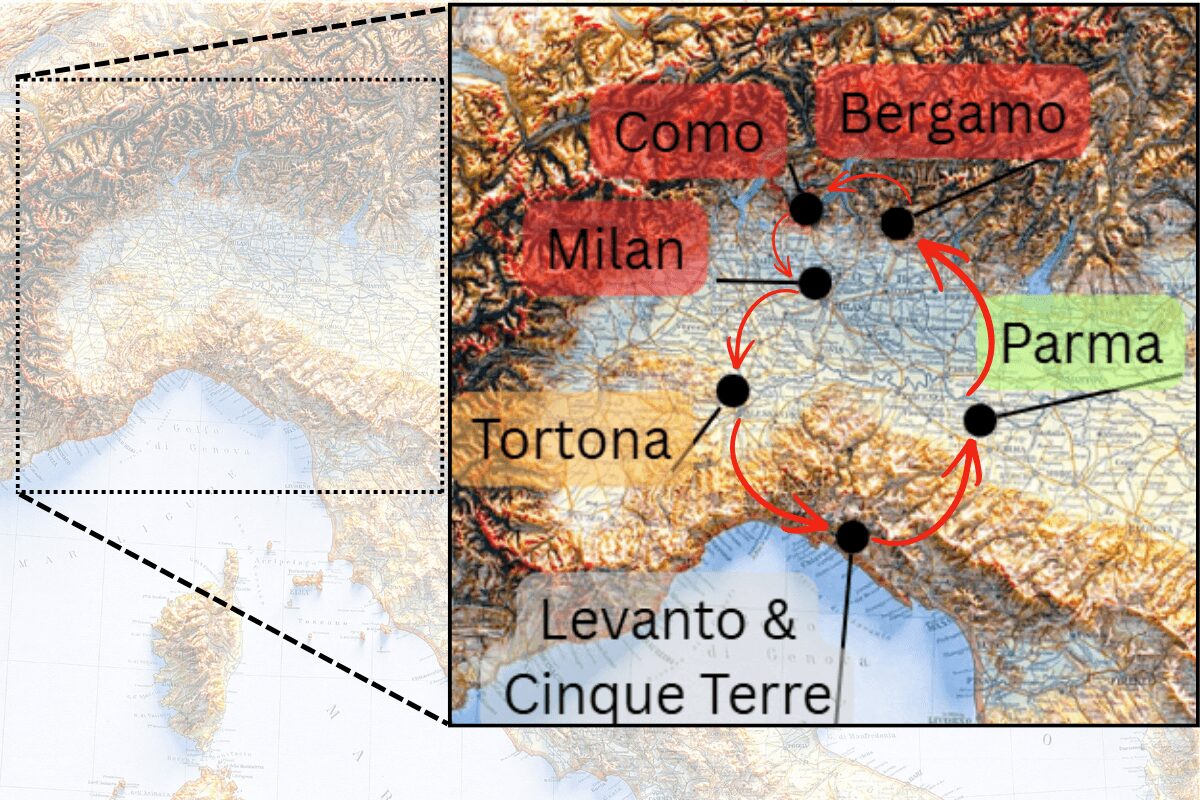
Tortona (Piemonte) – starting off in one of my happy places in Italy, exploring Derthona Timorasso wines and seeing familiar faces.
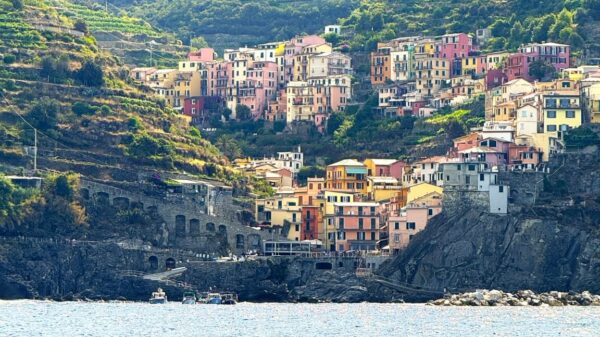
Levanto (Liguria) –a seaside town as a base to explore the villages of Cinque Terre (and seek out the local grapes Bosco, Vermentino Nero and rarer Rosesse Biancoand Piccabòn)
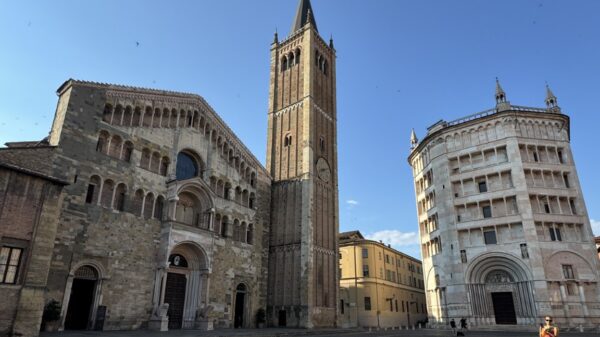
Parma (Emilia-Romagna) – I knew about the ham. Other than that, it was a good base to visit Japanese winemaker Shun Minowa and discover some of the 17 Lambrusco clones such as Grasparossa
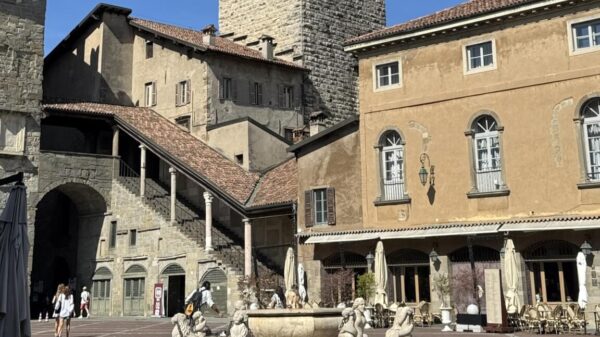
Bergamo (Lombardy) – a relatively arbitrary choice based on its location, the appeal of an old town, and an opportunity to taste the rare grapes Moscato di Scanzo(also Italy’s smallest DOCG) and Erbanno
Como (Lombardy) – chosen as I naively thought it would be cooler in the mountains, and for its proximity to the airport to return the hire car. I also discovered the relatively rare local grape Verdese.
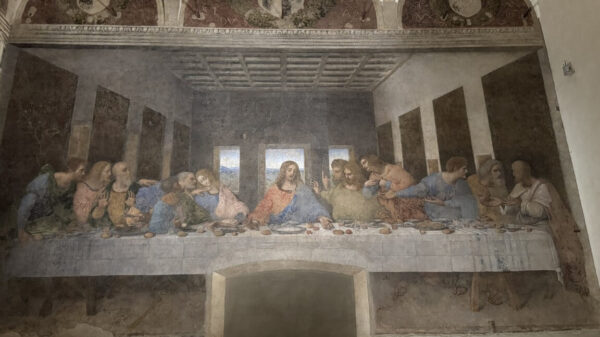
Milan (Lombardy) – The Last Supper, Milan Duomo and that fancy shopping arcade next to it were on the bucket list for our visitors. I was also able to track down one of the few bottles of Cascina Lieto’s Moscato in Milan, from Japanese winemaker Hiroto Sasaki.
The itinerary map can be seen in the image above. My wine haul can be seen on Instagram here.
Day 1 – Not a great start
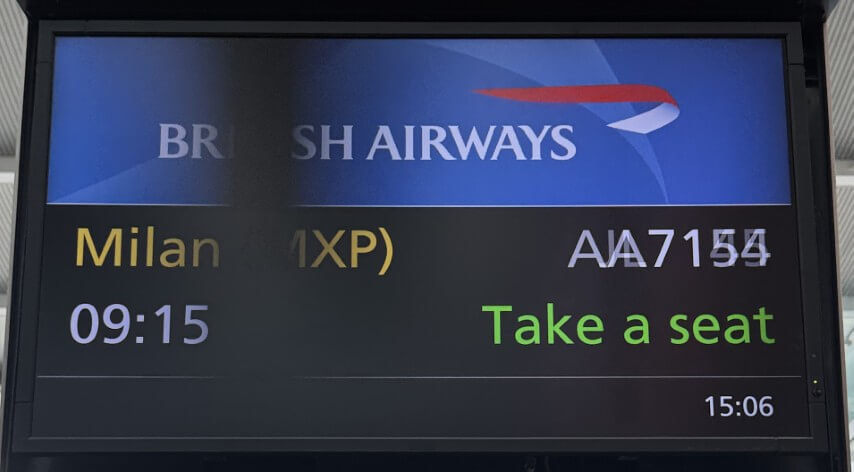
We had a gruelling 7-hour delay at Heathrow due to thunderstorms across Europe. It was an interesting lounge experience watching Amanda’s mother, less than half our size, eat constantly for 5 hours solid.
Saturday was therefore a write-off, and we had to cancel dinner at Degusteria Forlino (the Forlino family also own the Italian restaurant no menu in Singapore).
A further kick in the teeth came when the car-hire company, despite numerous calls and emails to advise them, refused to hold our car any longer than 4 hours after the pre-agreed (and pre-paid) pickup time. The result: an additional €1k to rent the only remaining car: an Audi A6 the size of a small spaceship.
Tortona
Arriving in Tortona at 10 pm, exhausted and having to manoeuvre the spaceship around the tight corners of the narrow central streets of an Italian town, I was met with a plethora of beeps and pings from every sensor in the over-engineered parking system.
Just enough time to check in and leave our bags off in the room with the broken aircon (the trio of bad luck thus completed?), we headed out for a pizza at the excellent (and airconditioned) Pizzeria Labo (map), which had updated their wine list since my last visit. They now have some excellent natural wines, and an impressive selection of Timorasso, including one that I had not yet discovered.
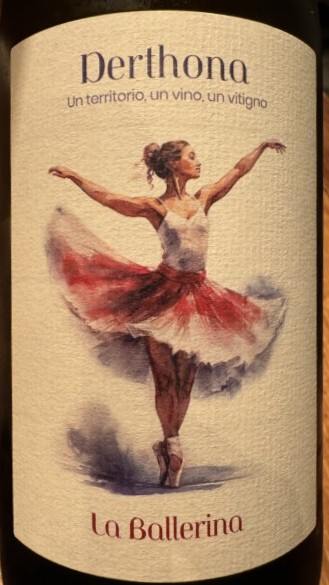
La Ballerina 2023 from Giulia Massa (no relation to Walter) – fresh and mineral (crushed stones) with light peach. We took the remainder of the bottle home with us, which lasted up to a week in the fridge. A surprisingly solid Timorasso from a relatively new producer, making me think that these are well-established vines.
I wasn’t able to find out a lot of detail about the wine other than it was produced/bottled at Pomodolce and is likely from Giulia’s own self-managed vineyards. My records tell me that this was the 79th producer of Timorasso that I have tasted.
Day 2 – Winery visits, a nice lunch, and a fancy dinner
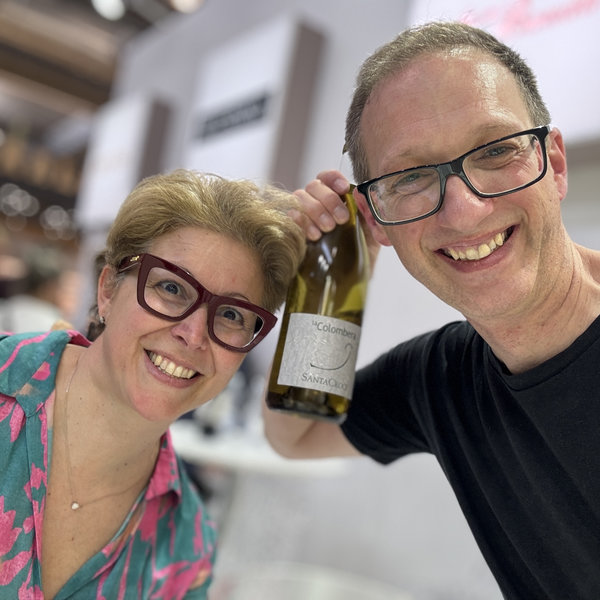
After a breakfast at the charming, historical Casa Sironi, we headed out to the first winery visit of the day, La Colombera.
La Colombera
A quick tasting at La Colombera, the first female producer of Timorasso, to try the latest vintages and a Timorasso Vermouth.
This is the second time I have visited the winery, and have met Elisa multiple times at trade shows. I thought I had made an appointment with her for a quick guided tour of the winery and short interview.
Alas, slight embarrassment ensued when she didn’t recognise me after two years and made an appearance in the middle of her busy schedule to say hello and ask me if I knew much about Timorasso.
Notes to self – 1) don’t leave it so long between visits to the region (my book on Japanese Wine has dominated my life in the interim), and 2) don’t be so shy on stressing your industry credentials when making winery appointments!
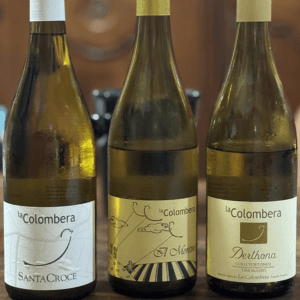
It was great to try the latest 2024 (3rd vintage) of Santa Croce from the youngest vines, aged in oak (50%, 12 months). Her line-up now resembles that of Chablis (towards which I feel the region is moving with their Piccolo Derthona / Petit Chablis, Derthona / Chablis and single-vineyard cru and premium oak-aged releases):
Tasted were:
Alice2025 – a simple, fresh aperitivo-style wine from Malvasia & Moscato, displaying citrus pith with a little herbal nip to it.
Bricco Bartolomeo2025 – an appley Cortese that’s halfway towards Timorasso in style with a little bit of complexity
Derthona2024 (5 vineyard blend) showing Timorasso typicity; steely and fresh with stone minerals and light aromatic, almost floral notes
Il Montino2024 (single-vineyard) – more subdued fruit with more elegance and chalkiness to the minerality. Still young and in need of further age to shine.
Santa Croce 2024 (youngest vines, part oak-aged) – the most textural of the three Timorasso. Some of that chalky/stone minerality but more roundness and softness from the barrel ageing.
Elisa 2022 – barrel-aged Barbera with blackcurrant jelly/jam fruit character and menthol high notes. Light structure and subtle finish.
Arché2019 – Croatina (aka Bonarda) with a powerful 15% alcohol that lets itself known on the nose. Strawberry jam aromas, fresh palate with balsamic, herbal notes. The alcohol is well integrated and balanced.
Monleale2022 – Barbera aged in 2,500 litre oak botte. The most structured of the 3 reds and still feeling quite young (or in need of aeration) as the structure overpowers the fruit at this stage.
Vermouth – one of the winery’s two Vermouths, this one from 100% Timorasso. Herbal, balsamic character with a light sharpness to the herbs in a lavender/thyme/rosemary way.
Lunch – Valli Unite
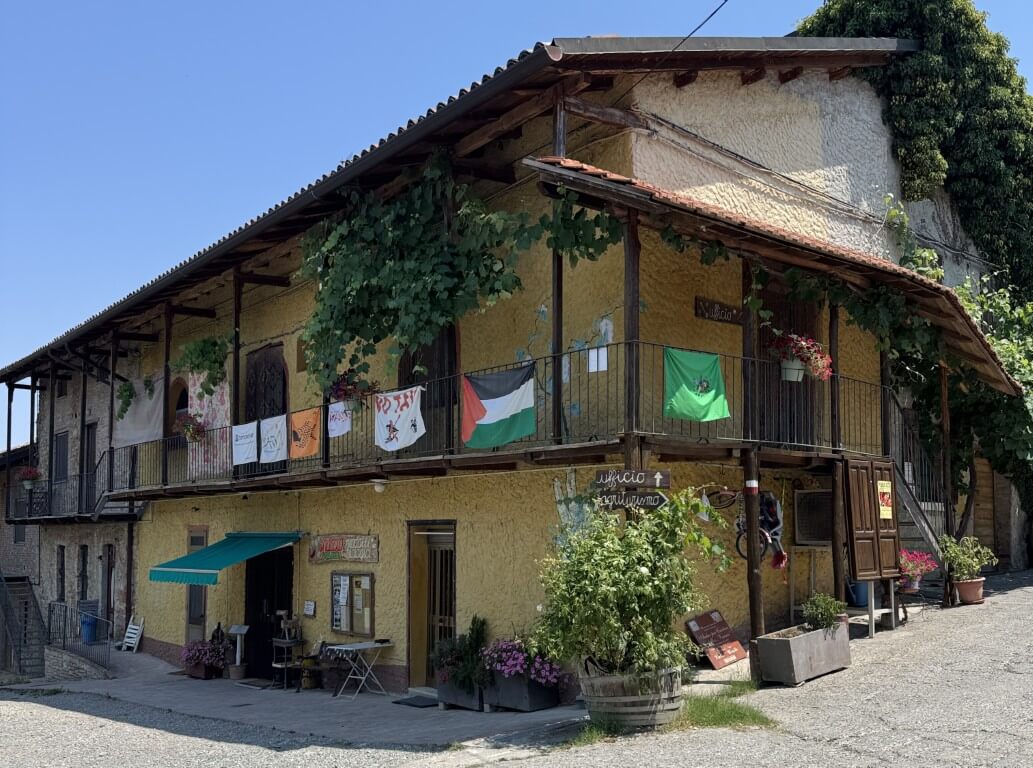
With some visits arranged in Carezzano and Costa Vescovato, 20 minutes outside Tortona, we opted for lunch at Valli Unitenearby.
I jokingly refer to Valli Unite as the hippy commune/kibbutz of Tortona. Established in the 1970s, it is now a 100 ha agricultural cooperative with an agriturismo (accommodation, camping, restaurant, store) and making natural wines.
The restaurant has a lovely outdoor terrace with views over the hills. Food is fresh, seasonal and organic with a range of wines available by the glass, alongside others.
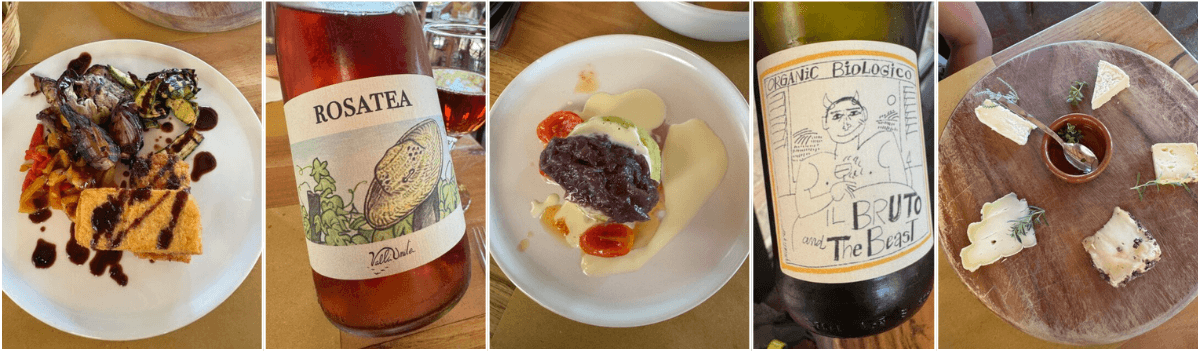
We opted for a Timorasso-free lunch, going for a rosé and pét-nat.
Wines
Rosatea – rosato blend of Malvasia, Brachetto, Muscat of Hamburg and Barbera. Natural. Refreshing with a bit of oomph from the fruit: tart cherry and confected strawberry.
Il Bruto & the Beast – a pleasant pét-nat from Cortese, Favorite and Moscato
Food
Fried polenta with roast seasonal vegetables and balsamic
Courgette flan with red onion topping and cream sauce (more a single-consistency flan than layered courgettes that we had expected)
Plate of raw milk cheese including the local Montebore cheese made from cow, goat and sheep’s milk in separate layers.
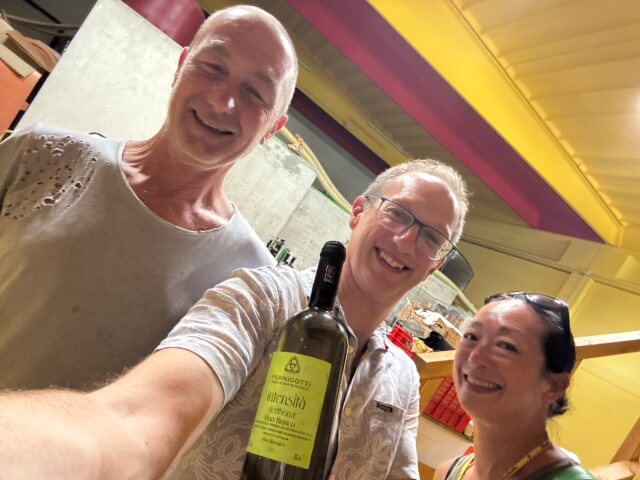
Vigneti Pernigotti
Pernigotti has been on my radar for several years, and this was my first time both visiting and tasting any of the wines.
Fabrizio Pernigotti is a down-to-earth, farming-focused producer with 4 ha of vines (1 ha Timorasso) cultivated organically.
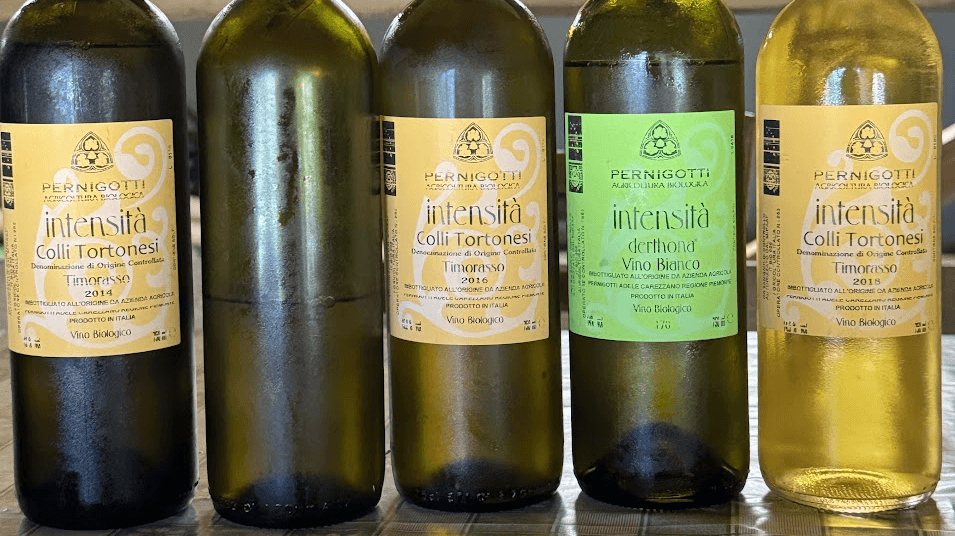
His tasting line-up is a Timorasso vertical. We tasted 2014-2018, each vinified quite differently depending on skin contact time, barrel ageing, and vintage conditions.
His Barbera is quite delicious too, with an amazing freshness and energy for a wine that’s nearly 11 years old.
Intensità (Timorasso)
2014 – Temperature-controlled fermentation with 1-5 days on lees and 50% aged 6 months in oak (the only vintage to undergo barrel-ageing). Mineral and peach character with fresh acidity. A classic Timorasso and interestingly no noticeable tertiary honey/petrochemical notes.
2015 – 8 days skin contact. Slight peach compote aroma with a savoury edge. Clean. Saline with a touch of savoury cream.
2016 – made as per the 2014 but without the oak. A whopping 15% alcohol. A slight peanut element to this one, but a lovely underlying salinity/minerality.
2017 – 30 days on lees as Fabrizio was in no rush to bottle and sell this vintage. Noticeable tertiary kerosene aromas with a steely edge. Textured (lees) with softer flavours and underlying tropical fruit from that ripeness and petrochemical notes. Bone dry (zero residual sugar).
2018 – this was the most overtly Timorasso-typical of the line-up for me with creamy, peachy, stone minerals on the nose. Despite nearly 8 years of age, it is still fresh and zippy and almost seems too young to drink yet.
Colombaia 2015 – (Barbera Riserva DOC) – 2 years in oak (1/3 new, 1/3 1st use, 1/3 2nd use). Sherbety, zingy aromas initially, with tertiary chocolate appearing later. Incredibly fresh with energy and vitality, with only that chocolate note indicating the age. The tannins, while low to medium, are a little rustic, but integrated and tamed. Racy, rustic, elegant.
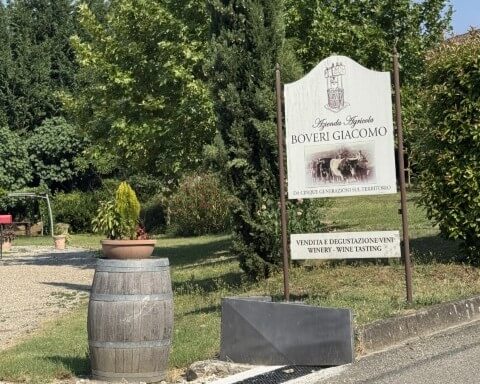
Giacomo Boveri
The last visit of the day was to Giacomo Boveri. I had met Giacomo and his wife Sara at the annual Timorasso tasting, Derthona 2.0, in 2024, my last visit to Tortona.
The winery also offers accommodation in a separate self-contained apartment www.casagiorgina.it, and a horizontal and vertical tasting experience of their three Timorasso crus and back vintages to show the evolution of the grape.
Giacomo was keen to show us the vines and the view to better understand the exposition, soil, terroir and a bit about the history of the region. On the crossroads of 4 regions (Piemonte, Lombardy, Liguria and Emilia-Romagna), it is part of the Piemonte administrative region, but culturally and gastronomically closer to other neighbouring regions.
White wines
All the winery’s Derthona Timorasso spend 18 months on lees with weekly battonage, then 12 months bottle-ageing before release.
Piccolo Derthona 2025 – from vines planted in 2013 at 250 masl. Simple and fresh with some stony mineral aromas, appearing more chalky on the palate. Less complex than their single-vineyard Timorasso, to be drunk as an aperativo as you would a Petit Chablis.
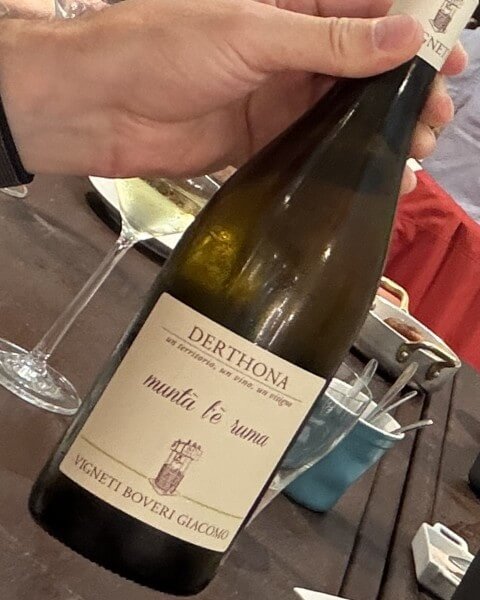
Muntà (l’è ruma) 2023– from vines planted in 2009 at 240 masl on clayey soil. Minerality defines this wine, with an underlying savouriness that creeps up slowly. Some light bruised fruit and a herbal nip on the finish. Giacomo describes this as his “most simple” cru with “softer” character.
Piazzera – from vines planted in 2004 at 270 masl on clayey / sand soil, named after the hill where it is located.
2023 – Fresher with more vibrancy and energy than Muntà. Softer minerality yet more saline.
2022 – a hot year resulting in a powerful wine. Softer minerals than the 2023 with some light honey notes yet incredible freshness.
2019 – the second vintage of this label and Giacomo explains he was still learning what it could become and how to handle it as a single-vineyard cru, which he calls his “COVID wine” as it was tank-aged and bottled during the pandemic, spending 30 months in total in the stainless steel tanks. Lovely tertiary character with pronounced petrol/diesel notes. Elegant. In a great place – Timorasso showing at its best.
Lacrime delBricco 2023 – the winery’s highest rated wine with Tre Bicchieri. From vines planted in 2006 at 300 masl in a separate valley with calcareous soils (near Monleale where Walter Massa’s vines are located) that were previously under the ocean. The most complex of the crus according to Giacomo, which he attributes to the sandy soil. I found this creamier with a little more body than the other cru.
Red wines
19 Marzo 1878 (2023) – Barbera from the winery’s oldest vineyard planted in 1920 at 250 masl. It is named after the date his great-great-grandfather bought the land on which the vineyard is located. Only stainless steel, no oak. Shy aromas. Fresh palate with decent fruit without being “fruity”. Light herbal notes.
Bricco della Ginestra 2017 – Barbera with 1 year in old barrels and 2 in bottle. Dark fruit character (blackcurrant, forest fruit) with more structure than the 1878. Some dried fruit, prune notes with fresh, racy acidity.
La Capellata 2021 – Freisa from vines planted in 2015. Stainless steel only. Light pharmaceutical notes with slightly rough tannins reminiscent of cigarette ash.
Aroma Wine Bar & Enoteca
The first wine bar I visited in Tortona remains my favourite. Run by husband and wife Vincenzo and Federica, who serve great wine and create some fun social media posts.
They have a selection of Timorasso, with at least one on by the glass, and have developed their own brand of gin, vermouth and amaro using Timorasso leaves from Walter Massa’s vines.
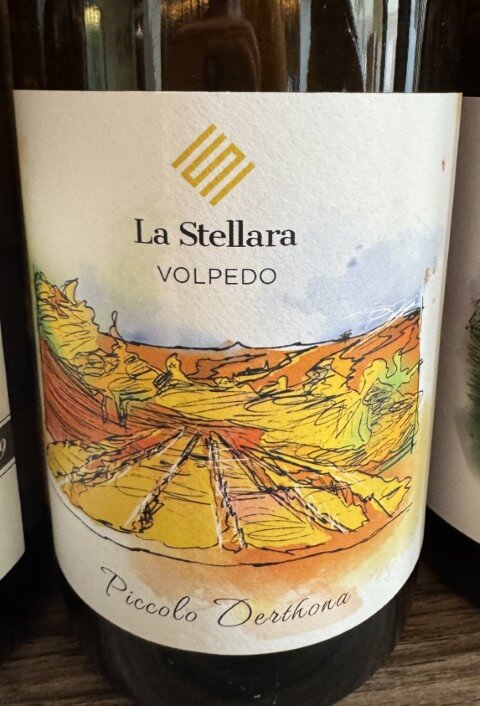
I got to try another new (for me: #80) producer: Piccolo Derthona from La Stellaria, and present Vincenzo with a copy of my book JAPANESE WINE.
See further photos and videos on my Instagram post:
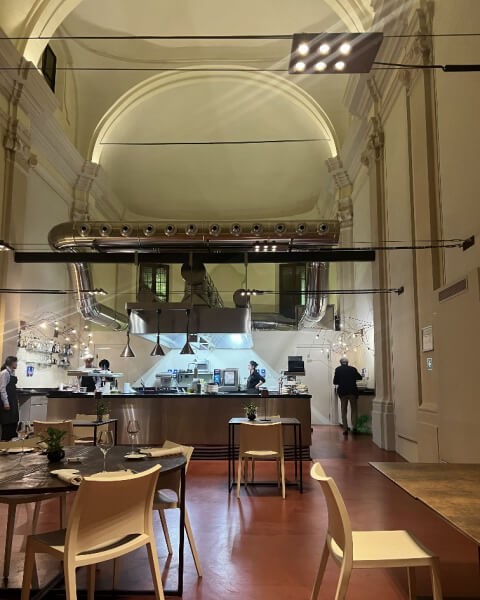
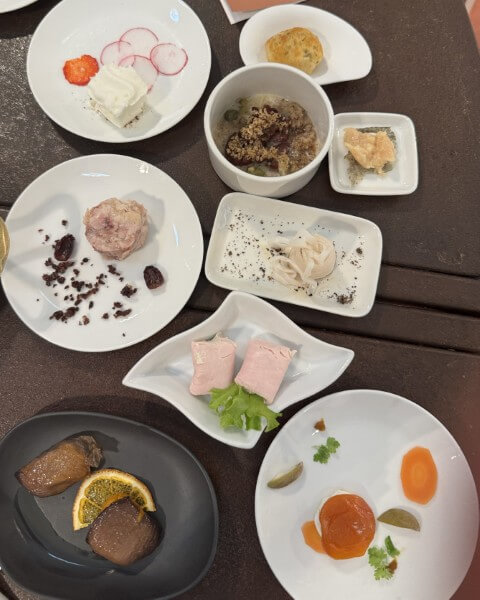
We treated the parents to the finest restaurant in town, which offers fine-dining at incredibly reasonable prices, alongside an extensive wine list with many Timorasso options: Anna Ghisolfi, named after the owner/chef, Anna…Ghisolfi.
The restaurant is located in a converted church, and while that could lead to a noisy, echoey environment, I have always found it very manageable as the general clientele are less excitable (ie loud) than the average casual Italian eatery.
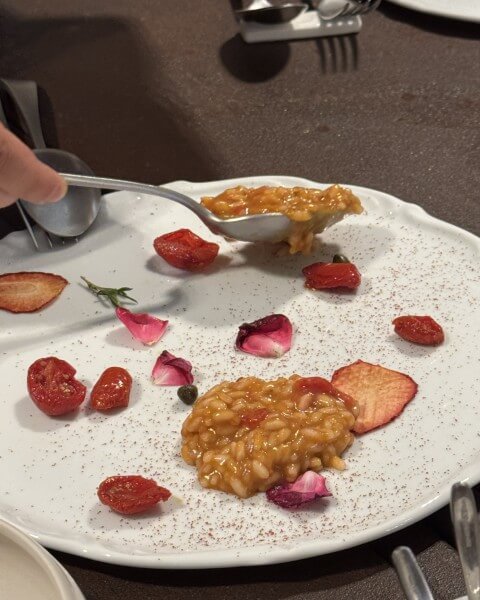
Their menu consists of two appetiser options, each with 6 or so plates (more than enough for 2 or 3 people to share) and Primi and Secondi dishes. There is no obligation to order any specific number of dishes, and we opted for sharing a risotto with strawberries and a few other dishes we enjoyed too much to interrupt with photos. The menu can be found here.
We chose a bottle of Giacomo Boveri’s Muntà l’è Ruma to accompany dinner. What better way to follow a winery visit than enjoying a bottle over a meal after tasting it with the winemakers that day.
Whisky Nightcap
Not yet ready for bed, we opted for a nightcap at Caffe Milano.
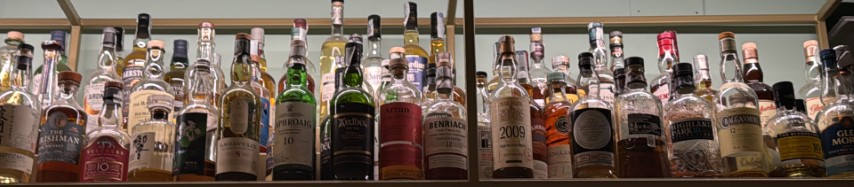
They have an impressive whisky selection (range, value, price), although being stored on the top shelf behind the bar during a heat wave, ice was required. I’d have had a hissy fit if I was served wine at this temperature. To be fair, I had to ask for the ice; it wasn’t a standard serving choice for them.
Whiskies at Caffe Milano, Tortona
Day 3 – Tortona to Levanto
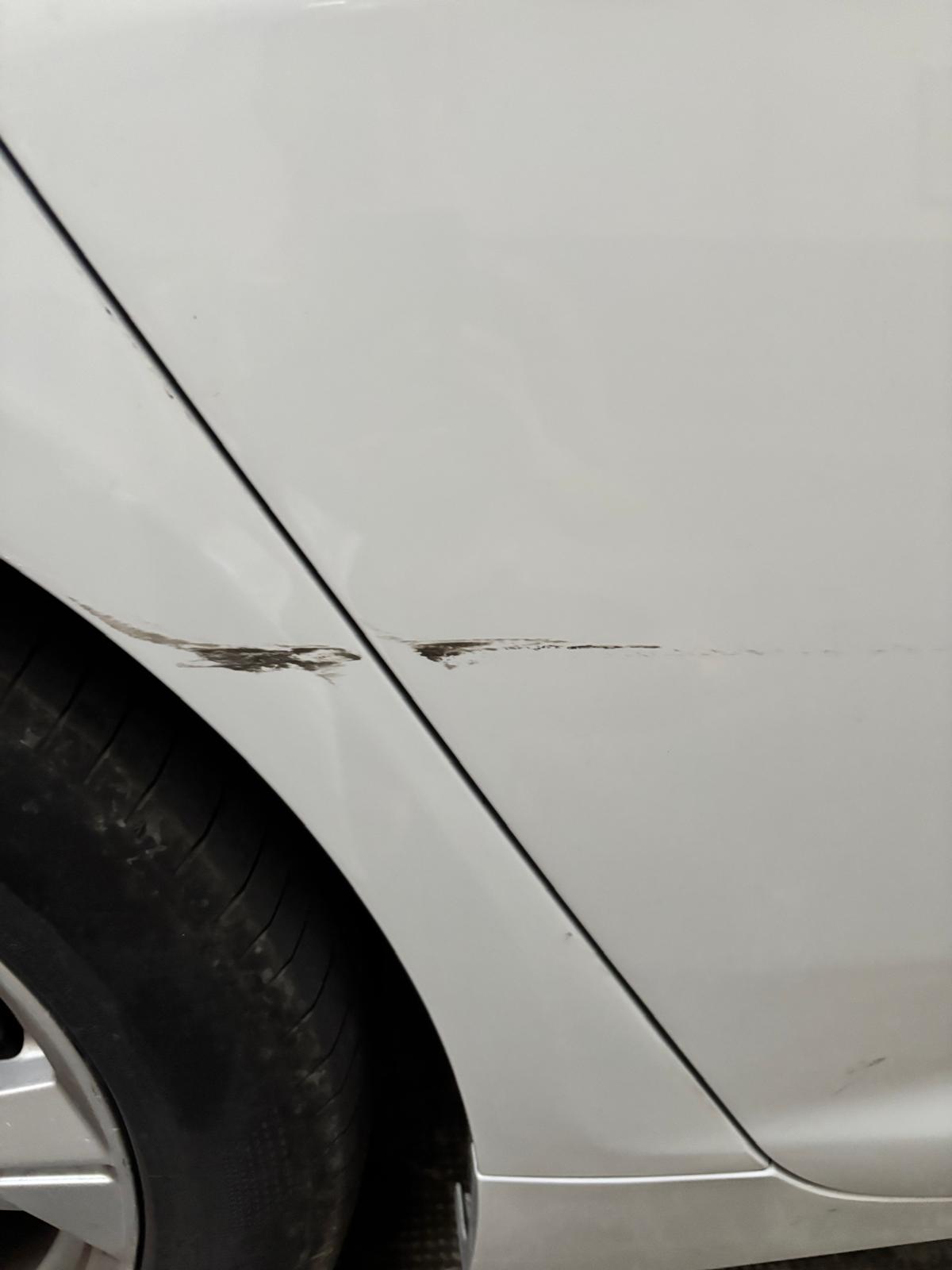
What a start to the day – a black mark across 3 of the car’s panels that had us scratching our heads as Amanda was on hand for every tight manoeuvre, guiding me from the street. We decided to worry about it later and get on with the holiday.
Read on for part 2 (of 6) – Levanto (Liguria) – seaside, Cinque Terre, and some local/rare grapes: Bosco, Vermentino Nero, Rosesse Biancoand Piccabòn.