No Comments

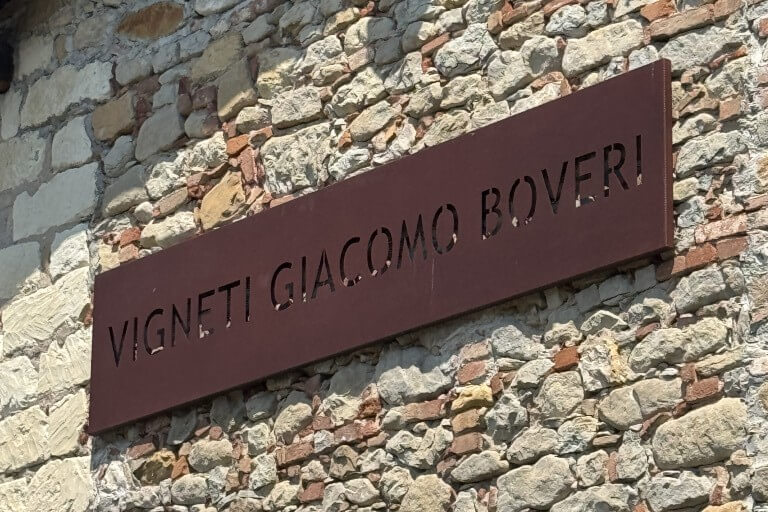
Vigneti Giacomo Boveri

Vigneti Boveri Giacomo is one of Colli Tortonesi’s top producers of Timorasso, with over 20 years’ experience with the grape.

Giacomo hadn’t intended to get into winemaking and had trained in telecommunications. After graduation, he decided to take over the family farm in 1988, becoming the 5th generation of winemakers. As a lifelong wine lover, Sara jokes (?) that she had to taste the quality of Giacomo’s wine before deciding whether to marry, and in 2010, she gave up her legal career to join the winery full time.

Giacomo Boveri & wife SaraI first met Giacomo and his wife Sara at the annual Timorasso tasting event, Derthona 2.0, in 2023, spending a bit more time speaking to them at the following year’s event, and had been keen to visit the winery and vineyards ever since.

The opportunity arose in July 2026 on the back of a family trip to Northern Italy, where Giacomo gave us a tour of the vines followed by a tasting of his Timorasso crus in the bespoke upstairs tasting room.

While one name dominates the “Timorasso” brand internationally, Giacomo’s wines are fast gaining recognition, with global exports reaching as far as Australia, where they are imported by Etheral Wines.


Location

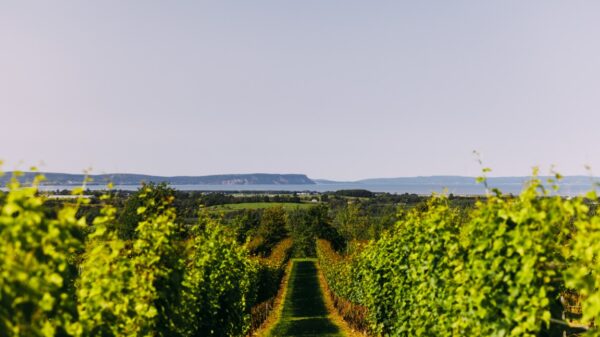
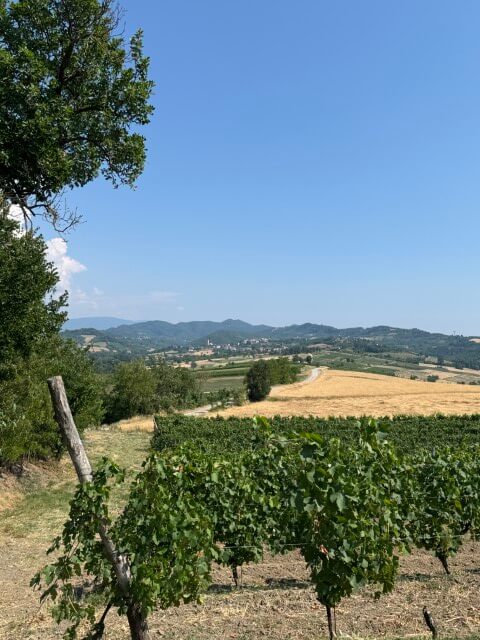
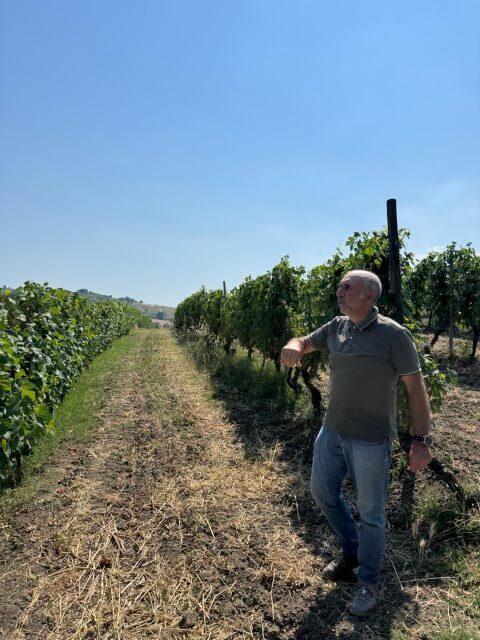
We began with a tour of the vineyard to better understand the exposition, soil, terroir and a bit about the history of the region. We headed to the nearby Piazzera vineyard on the Piazzera hill where the Timorasso vineyard (planted in 2004) is aligned perpendicularly to the neighbouring Barbera vines.

From here we got a view across the hills to better understand the aspect and topography.

On the crossroads of 4 regions (Piemonte, Lombardy, Liguria and Emila-Romagna), it is part of the Piemonte administrative region, but culturally and gastronomically closer to other neighbouring regions. In contrast to the neighbouring Gavi region, where wines are defined by terroir and vinification, Timorasso is mostly characterised by terroir and time, developing delightful tertiary notes at around 5 years old.

Vineyards

Giacomo manages 10 ha of vines of mainly Timorasso and Barbera with some Freisa and Croatina (Bonarda). Most of the vines are located at 240-250 masl beside the winery on clay/sand soil, with a further Timorasso vineyard (for the Lacrime del Bricco label) located closer to Monleale, on more calcareous soil at a slightly higher altitude of 300 m.

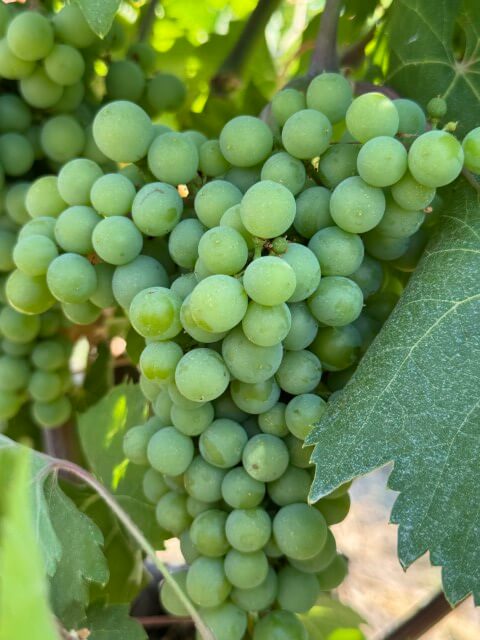
Giacomo explains how Timorasso is much more difficult to manage than Barbera, requiring decisions on which of the 3 branches it produces should be kept, and which two should be removed.

Increased temperature due to global warming has generally helped Timorasso (unless an excessively dry period reduces yields), and harvesting, previously in mid-September to early October, is now in mid-to-late August. While producers like Vigneti Massa have had to move to mechanical methods to complete the harvest in the shorter two-week window, Giacomo still hand-harvests with the help of additional workers.

See tasting notes below, and the producer profile on Giacomo Boveri for further details on each of the Timorasso vineyards. An additional vineyard was planted in April 2026, expected to bear fruit for production of Piccolo Derthona from 2028.

Range

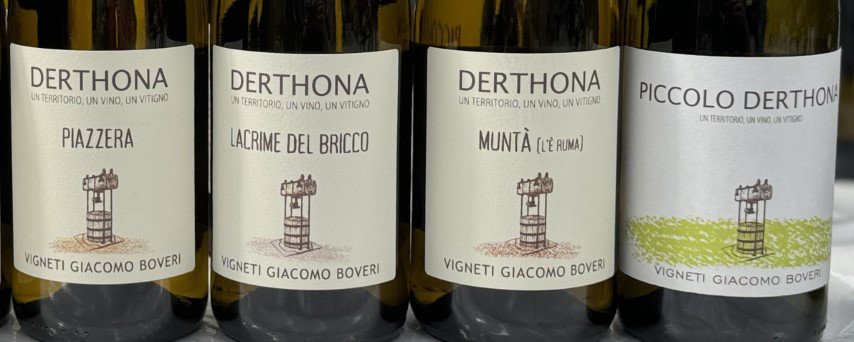
Giacomo produces 4 Timorasso: a Piccolo Derthona and 3 single vineyard crus.

Boveri Giacomo Timorasso labels

Giagomo’s Piccolo Derthona comes from his youngest vines planted in 2013, which, in their 10th year of producing fruit, will go into a “Derthona” DOC wine (later harvest, longer ageing, more complex). Yields are around 20% higher than Derthona, although they are pressed even more gently resulting in 0.5 l/kg (vs 0.6 l/kg for Derthona), effectively producing the same amount of wine per kg of grapes.

Following extensive testing, and blind tasting his their own wines aged under different closures, the winery has decided to move to screwcap since the 2023 vintage (as has the most famous producer of Timorasso) to ensure consistency.

What makes the winery’s tastings special is not only the comparison of Piccolo and the 3 crus, but also mini verticals. We had the opportunity to taste a mini-vertical of Piazzera: 2019 (the 2nd vintage ), 2022, and 2023 (the latest vintage).

While Timorasso is my passion and primary interest for visiting the region, every producer is proud of their Barbera, almost it can seem, more than their Timorasso, and several Barbera and a Freisa made an appearance at the end of the tasting.

White wines

All the winery’s Derthona Timorasso spend18 months on lees with weekly battonage, then 12 months bottle-ageing before release.

  • Piccolo Derthona 2025 – from vines planted in 2013 at 250 masl. Simple and fresh with some stony mineral aromas, appearing more chalky on the palate. Less complex than their single-vineyard Timorasso, to be drank as an aperitivo as you would a Petit Chablis.
  • Muntà (l’è ruma) 2023– from vines planted in 2009 at 240 masl on clayey soil. Minerality defines this wine, with an underlying savouriness that creeps up slowly. Some light bruised fruit and a herbal nip on the finish. Giacomo describes this as his “most simple” cru with “softer” character.
  • Lacrime del Bricco 2023 – the winery’s highest rated wine, awarded Tre Bicchieri by Gambero Rosso. From vines planted in 2006 at 300 masl in a separate valley with calcariouis soils (near Monleale where Walter Massa’s vines are located) that were previously under the ocean. The most complex of the crus according to Giacomo, which he attributes to the sandy soil. I found this creamier with a little more body than the other cru.
  • Piazzera  – from vines planted in 2004 at 270 masl on clayey / sand soil, named after the hill where it is located.
    • 2023 – Fresher with more vibrancy and energy than Muntà. Softer minerality yet more saline.
    • 2022 – a hot year resulting in a powerful wine. Softer minerals than the 2023 with some light honey notes yet incredible freshness.
    • 2019 – the second vintage of this label and Giacomo explains he was still learning what it could become and how to handle it as a single-vineyard cru, which he calls his “covid wine” as it was tank aged and bottled during the pandemic, spending 30 months in total in the stainless steel tanks. Lovely tertiary character with pronounced petrol / diesel notes. Elegant. In a great place – Timorasso showing at its best.

Red wines

  • 19 Marzo 1878 (2023) – Barbera from the winery’s oldest vineyard planted in 1920 at 250 masl. It is named after the date his great-great-grandfather bought the land on which the vineyard is located. Only stainless steel, no oak. Shy aromas. Fresh palate with decent fruit without being “fruity”. Light herbal notes.
  • Bricco della Ginestra 2017 – Barbera with 1 year in old barrels and 2 in bottle. Dark fruit character (blackcurrant, forest fruit) with more structure than the 1878. Some tried fruit, prune notes with fresh, racy acidity.
  • La Capellata 2021 – Freisa from vines planted in 2015. Stainless steel only. Light pharmaceutical notes with slightly rough tannins reminiscent of cigarette ash.
 

The winery also offers accommodation in a separate self-contained apartment with 3 rooms suitable for up to 5 guests.
https://www.casagiorgina.it

You might also like
Tags: Derthona, Italy, Timorasso, Winery

More Similar Posts

Leave a Reply

Your email address will not be published. Required fields are marked *

Fill out this field
Fill out this field
Please enter a valid email address.
You need to agree with the terms to proceed