Part 4 jump to main content.
Preamble
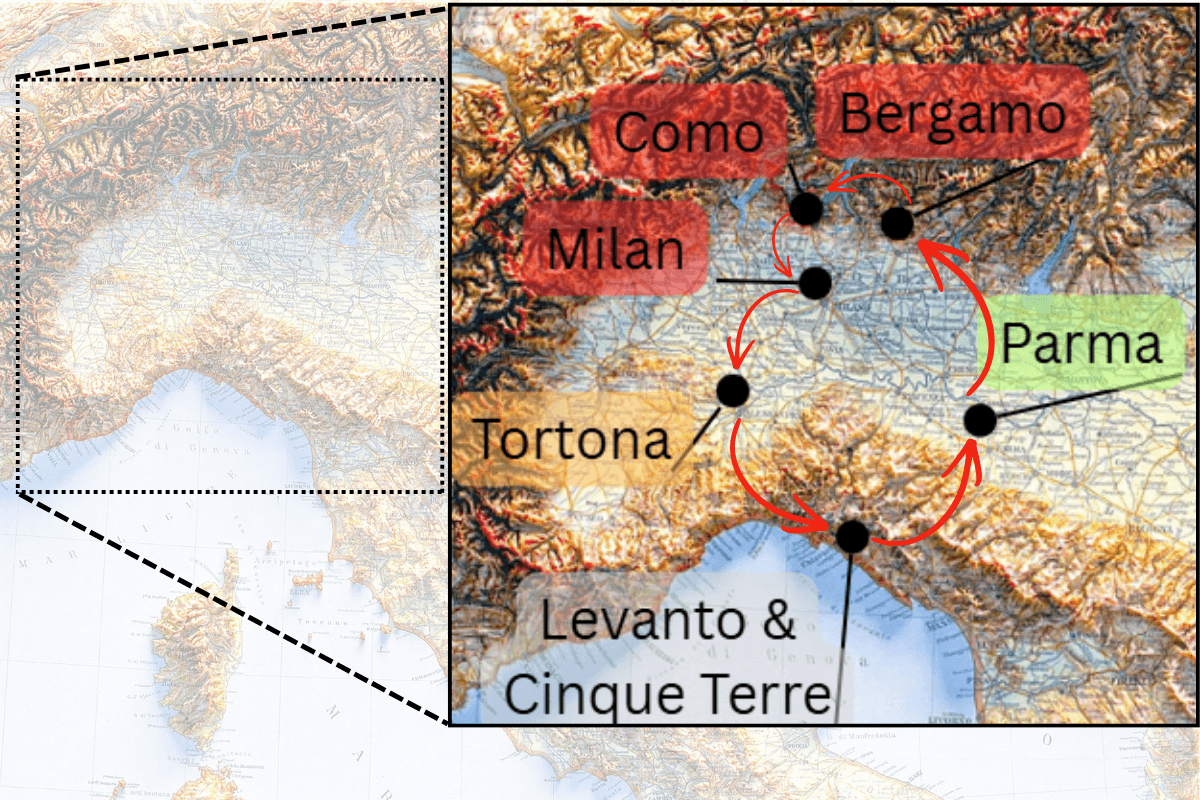
In late June 2025, my 50th birthday celebrations were put on hold as my partner’s parents decided on an extended trip to Europe, perhaps their last, for which I was volunteered to chauffeur us around Northern Italy for 2 weeks during one of the most intense heatwaves since the week I was born.
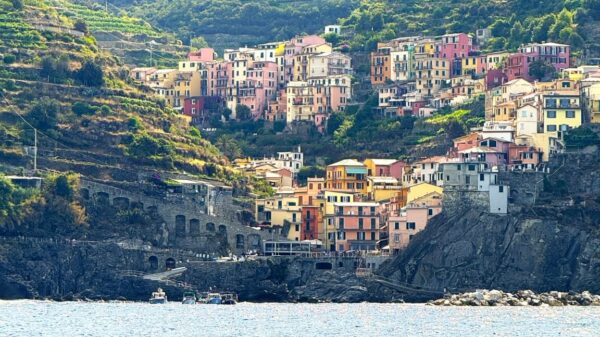
Her mum was determined to see all cinque of the Cinque Terre villages and some of Milan’s popular tourist sites. Her dad came along for the ride, perhaps watching more table tennis and political clickbait on his iPad than the historical sites, and asking why there was only Italian food when Singapore had much more variety (The Three Amigos anyone?). We, on the other hand, braced ourselves for a fortnight of underwhelming coffee; after many previous trips to Italy and over a decade holidaying in France, we were mentally prepared.
With two weeks to fill, my only stipulation was that we start with a few days in Tortona, home of my favourite grape: Timorasso, the grape and region that spurred me to start writing about wine.
I knew I’d naturally set myself ad-hoc side missions to seek out lesser-known native grapes in every subsequent destination.
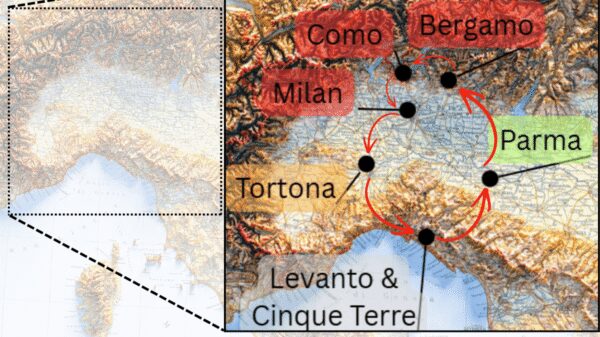
The Itinerary:
- Tortona (Piemonte) – starting off in one of my happy places in Italy, exploring Derthona Timorasso wines and seeing familiar faces.
- Levanto (Liguria) – a seaside town as a base to explore the villages of Cinque Terre (and seek out the local grapes Bosco, Vermentino Nero and rarer Rossese Bianco and Piccabòn)
- Parma (Emilia-Romagna) – I knew about the ham. Other than that, it was a good base to visit Japanese winemaker Shun Minowa and discover some of the 17 Lambrusco clones such as Grasparossa.
- Bergamo (Lombardy) – a relatively arbitrary choice based on its location, the appeal of an old town, and an opportunity to taste the rare grapes Moscato di Scanzo (also Italy’s smallest DOCG) and Erbanno.
- Como (Lombardy) – chosen as I naively thought it would be cooler in the mountains, and its proximity to the airport to return the hire car. I also discovered the relatively rare local grape Verdese
- Milan (Lombardy) – The Last Supper, Milan Duomo and that fancy shopping arcade next to it were on the bucket list for our visitors. I was also able to track down one of the few bottles of Cascina Lieto’s Moscato in Milan, from Japanese winemaker Hiroto Sasaki.
My wine haul can be seen on Instagram here.
Lombardy’s wines and lesser-known grapes
- DOC(G)/IGTs: Lombardy has 5 DOCGs, 19 DOCs and 17 IGPs (if my calculations are correct)
- The most famous of these are Franciacorta (fizz), Valtellina (Nebbiolo that’s on trend) and Lugana (around Lake Garda) with Italy’s smallest DOCG Moscato di Scanzo catching my attention.
- Main grapes: there are many international grapes (Chardonnay, Cabernets, Merlot etc.) with some local rare varieties interesting me: Moscato di Scanzo, Erbanna and Erbamat (the 4th grape used in Franciacota).
Bergamo
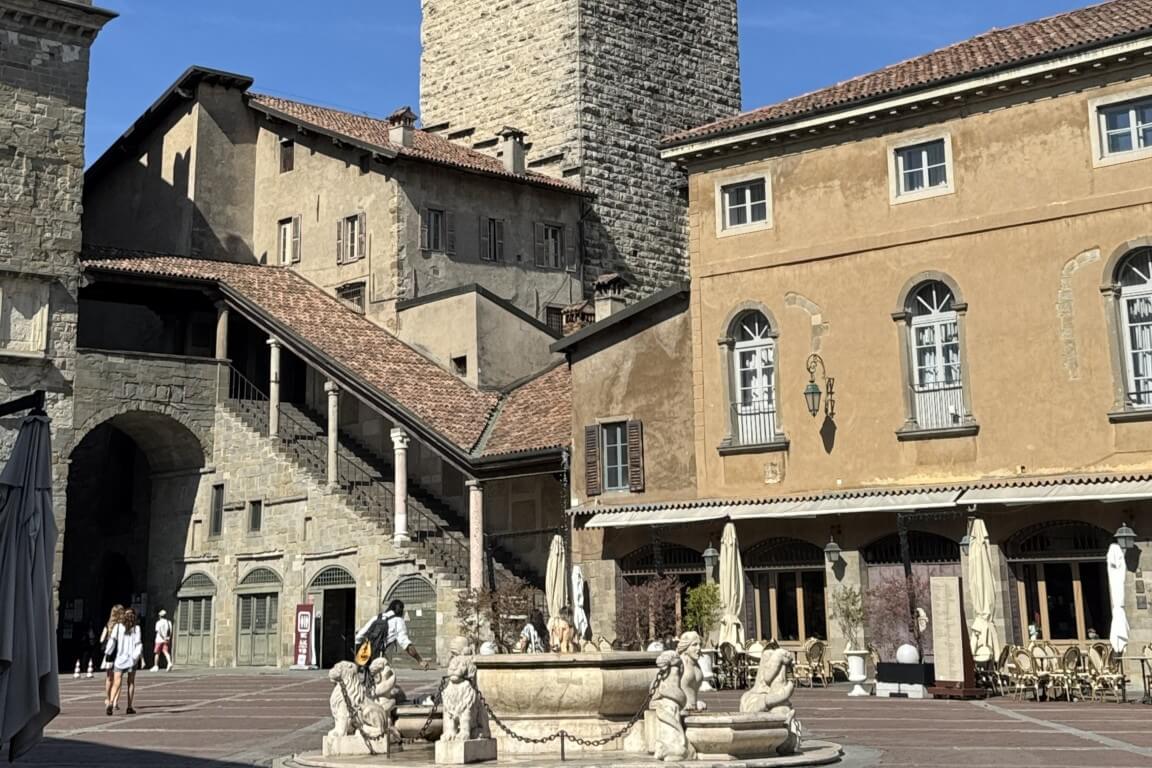
- Bergamo is around 1 hr’s drive north-east of Milan and has a picturesque old-town on a hill, with a funicular leading up to it
- Recommended wine (& cheese) spots in Bergamo: Superbar, Bù Cheese Bar, Ombra
- Places we were recommended (but didn’t manage to check out): Trex, Polpa, Rotta Vino
- Specialty coffee: Bugan Coffee Lab (2 venues)
Day 9 – Bergamo Bearings
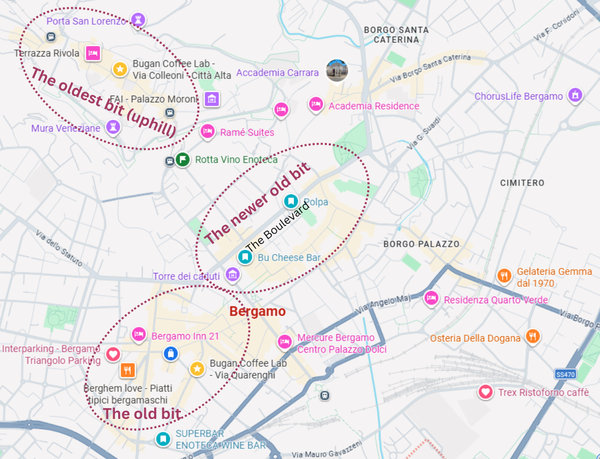
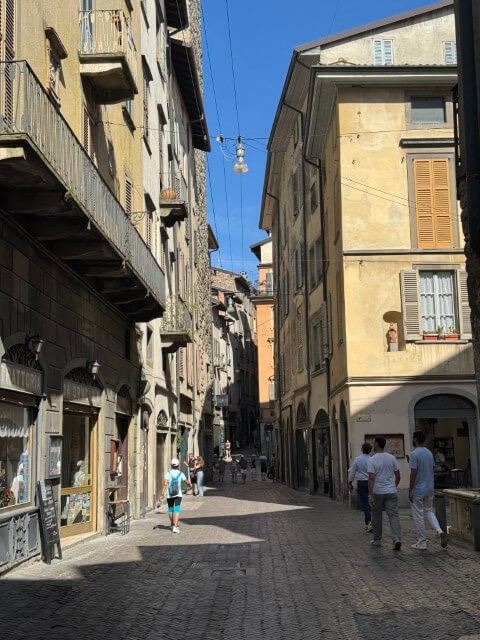
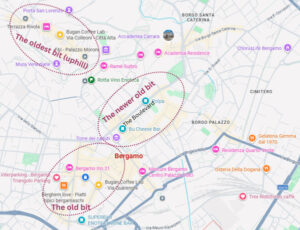
The town seems to be divided into 3 parts as far as can understand (full disclosure – I didn’t read up on it at all online, or in any guide books, we were in a “let’s chill and wing it” mood):
- The older west end of town (where we were staying)
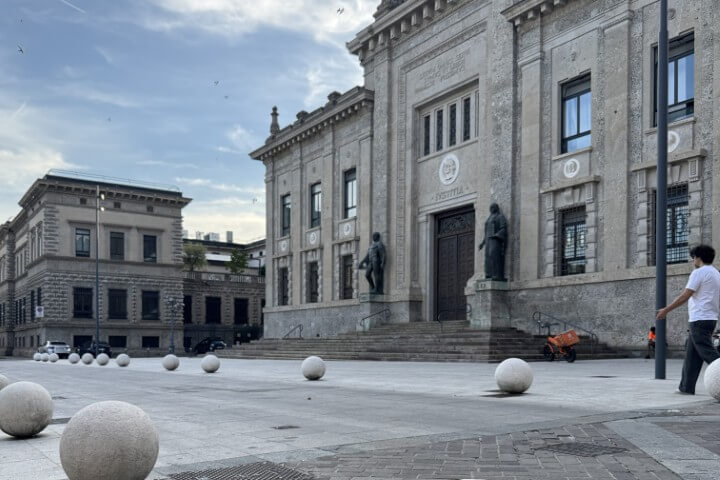
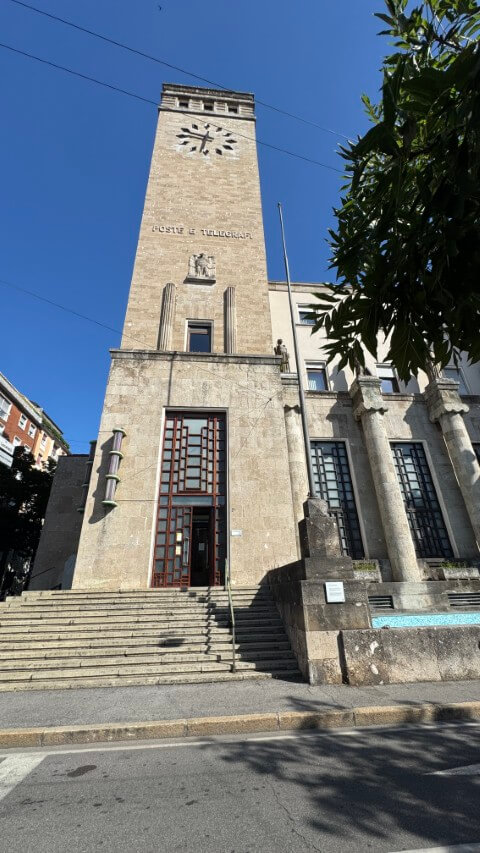
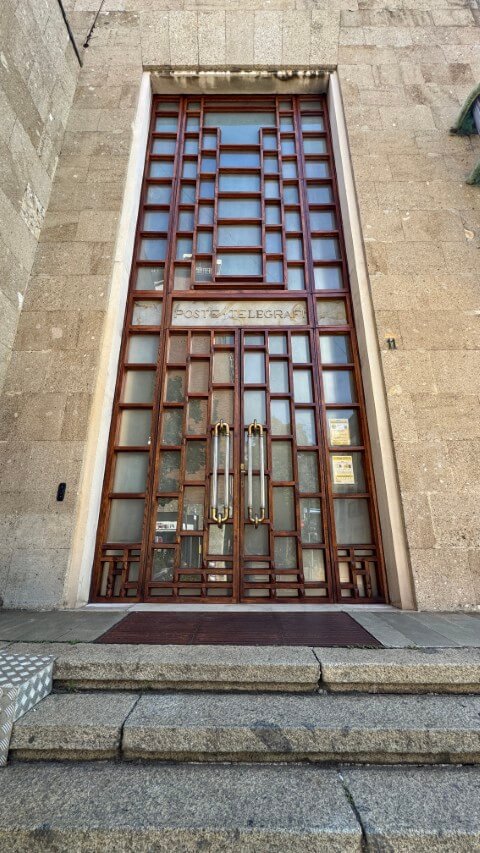
- The more modern north-east side built around a central boulevard with fancier shops, and impressive bank and post office buildings.
- The old historic town up the hill (with a charming funicular) to the north
Coffee time
I was quite looking forward to Bergamo. Not because I knew anything about it, but more that it had two specialty coffee shops, so we could finally get a decent coffee.
(Trigger warning, anyone who thinks that Italian coffee is “great” may find the following upsetting).
The world of coffee has moved on since the 1990s, and I see Italy as having the “curse of the first mover”. They have yet to catch up with the new leaders such as Australia and New Zealand that focus on provenance, suitable roasting levels, preparation, flavour, texture, nuance and quality. Even the UAE and Saudi Arabia have leapt ahead of Italy’s industrial-scale, heavily-roasted, yet cheap (part of the problem) internationally recognised brands.
We were however hampered by our timing. Many places close on Sundays and Mondays, the days were were in Bergamo. The nearby Bugan Coffee Lab was closed on Sundays and their branch up the hill in the old-town was a little too far, and we were saving that for tomorrow.
Arrival
We parked at perhaps the most confusing multi-storey car park in Italy – Interparking Triangolo – getting out is easy enough, finding the payment kiosk, your bearings, or any way back in was an ordeal.
En-route to the apartment, I dropped in to the nearby Signorvino (a famous wine store/bistro chain across Italy) to be slightly patronised by very attractive looking staff who cared more about looking buff than they did about wine. Realising I had no chance of finding anything other than mainstream and premium names (no small producers or rare grapes here), I got Googling for other wine stores nearby that may have Moscato di Scanzo.
Arriving at the apartment, the owner was still explaining to Amanda the intricacies of everything. I have a limited attention span and patience for long check-ins with in-depth explanations of every plug, handle and door. The owner’s husband did catch my eye and sympathise when I arrived, just as his wife was mid-explanation on the finer details of how to lock the front door. They were, however, very lovely and helpful, and, following my failure to find the ticket booth at the car park, they offered to accompany us there to sort out the 3-day ticket, at which point, I couldn’t find the ticket. While I ransacked my bags in a tizz, they took Amanda, showed her the kiosk (hidden in plain sight), explained what had happened, and had the staff semi-reluctantly issue a new ticket. I subsequently found the original in the boot of the car.
Lunch options
I made an early start, sussing out town and possible lunch options. I found the natural wine bar Ombra on the Raisin app. It looked great, with an interesting wine selection, but lunch was more of a “brunch” (avocado toast), and the more interesting dishes were a bit meaty, and only served in the evenings. They also had a bottle of dry, Moscato di Scanzo rosato that intrigued me. Closed on Mondays, I made a mental note to end the evening here.
While the area we stayed in seemed quite bustling with outdoor cafés, a closer look revealed that most of these were glorified kebab joints and tequila bars, so we faffed about on foot and on our phones looking at suitable lunch menus (decent food. Aircon. Good wine a bonus).
Lunch at Il Cortiletto
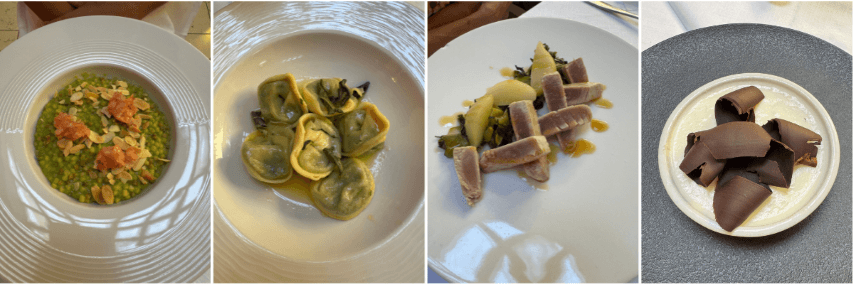
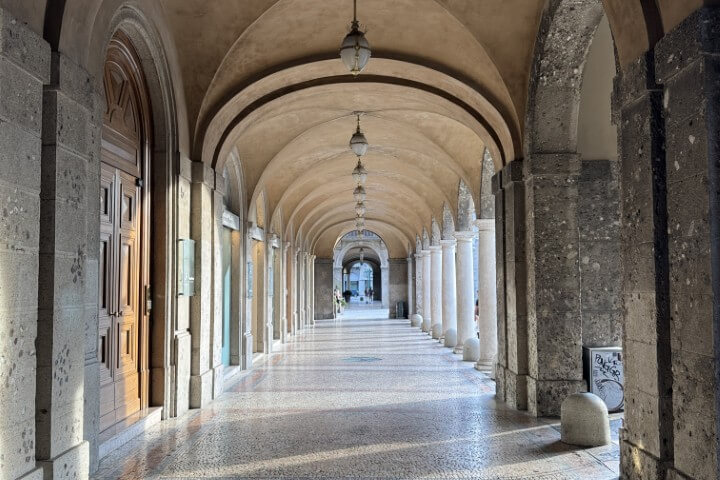
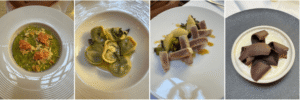
Il Cortiletto hit the spot perfectly. Outdoor seats. Indoor restaurant at the end of the arcade, a sister wine-bar next door and most importantly: aircon.
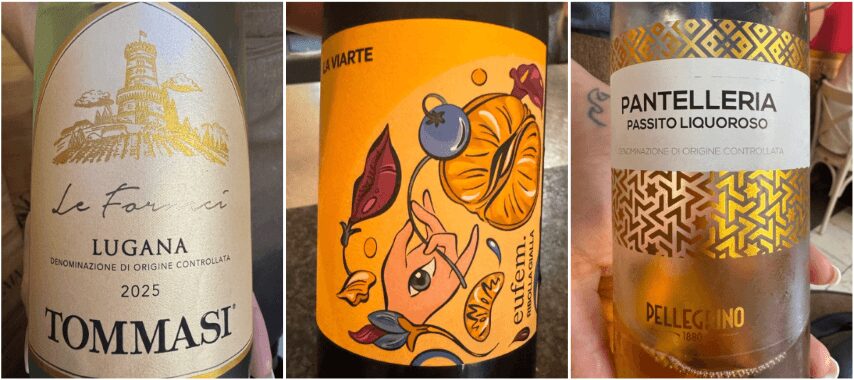
It sits somewhere between modest fine-dining and fancy café fayre – the food was perfectly prepared, well-balanced, well-presented and tasty. They had a decent enough selection of wines suitable for a casual lunch, including a dessert wine from Pantelleria (a region which still sounds to me like a mix between an item of lingerie, and a character from a Philip Pullman novel).
For dinner, Amanda’s father put his foot down on any more Italian food, and found a cheap Chinese nearby, while I ventured into the other end of town where I had identified a cheese bar. Right up my geek street!
The other part of town
The posher, north-east end of town has much larger streets, grander buildings and fancier arcades and is the gateway to the upper old town on the hill.
Popping in first to another wine bar at the far end of town, I was met by the smell of burning incense sticks (sacrilege, and an olfactory assault in my books), however the manager was lovely and took me across the square to the store to show me some of the local producers, recommending those worth visiting, and sharing screen shots of their contact details (Pagnoncelli Folciere and Caminella were highly recommended).
Given more time, I’d have loved to have visited a few, but the heat wave and entertaining the family was about as much as I could manage, and I was happy to simply understand the town and region a bit more, and enjoy what wines I could find in the local bars.
Bù – the best cheese bar in Bergamo
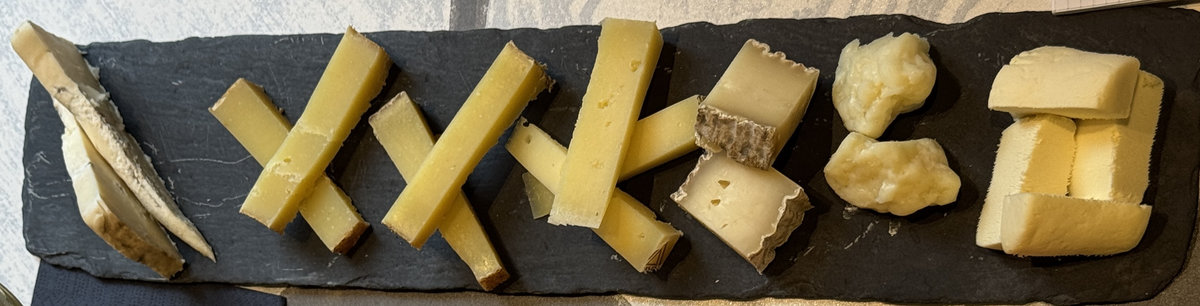
I couldn’t believe my luck to find Bù Cheese Bar in Bergamo. Easily dismissed as just another bar with the street full of people drinking lager and spritz, on closer inspection, it has an excellent range of wines (by the bottle), artisanal cheese, and a modest selection of wines by the glass.
More importantly, they had a whole menu of cheese, available in small / sharing portions, with production, ageing (affinage…ing?) and tasting notes against each one!
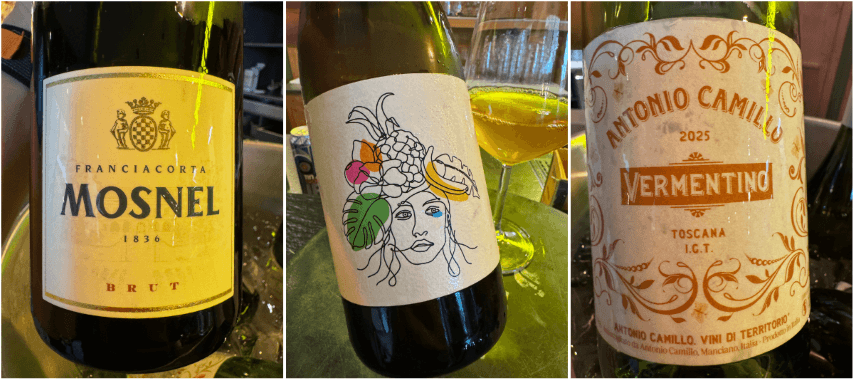
I ordered a 7 cheese platter, a glass of Franciacorta, and sat myself down for a mini-marathon of cheese tasting while Amanda and her parents had a whole Chinese meal for less than the cost of my wine and cheese indulgence!
Following the cheese overload, we headed to Ombra to check out their wines.
Ombra – natural wine bar
We were served by the charming Pietro who recommended a few other venues like Trex, and lamented with us on the quality of coffee in Italy (outside of specialty coffee lovers, very few Italians would agree – they’ll simply plough teaspoonfuls of sugar into it, itself a sacrilege in the specialty coffee world, chug it back quickly to hasten the caffeine hit and avoid the taste).
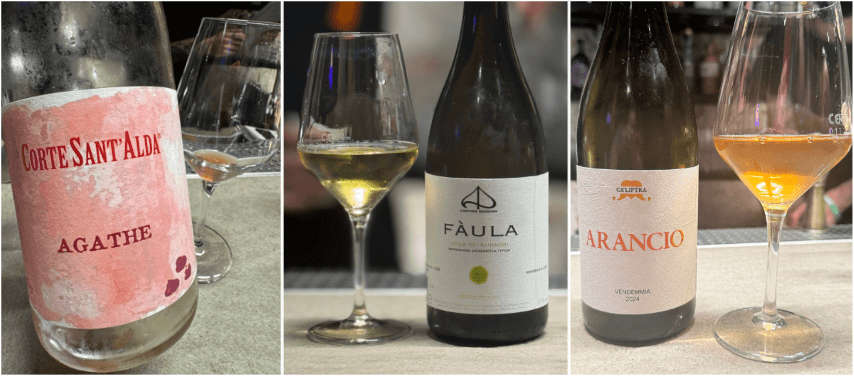
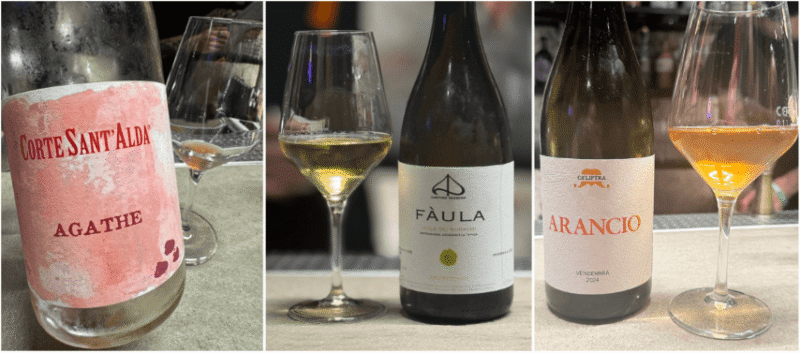
We enjoyed a few wines including a tasting of Molinara (a new grape for me, so geek-out time) and an astounding Iosla dei Nuraghi from Sardinia on a par with Tenerife wines.
Pietro joined me geeking out, looking through their wine list for anything rare or new to me. I wasn’t 100% sure that the Moscato Rosso was the same as Moscato di Scanzo, so I bought a bottle of Erbanno (another new grape for me) to take home and share with the boys.
Day 10 – Bergamo Old Town & a few rare grapes
Bugan Coffee Lab – Specialty coffee in Bergamo
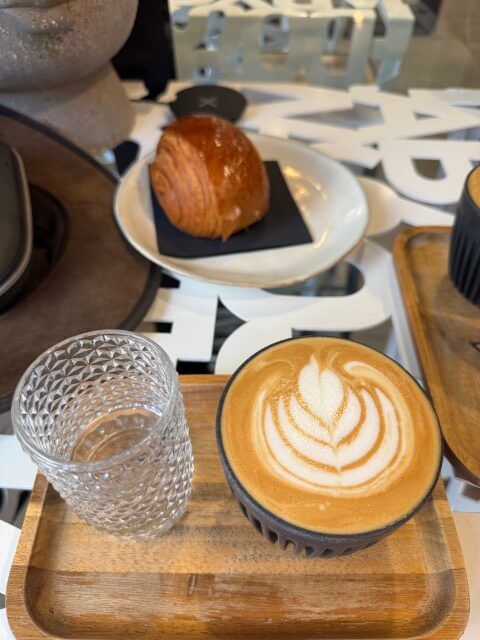
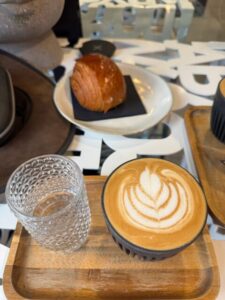 Finally some decent coffee! A bit pricy at €5 for a flat white, but worth it!
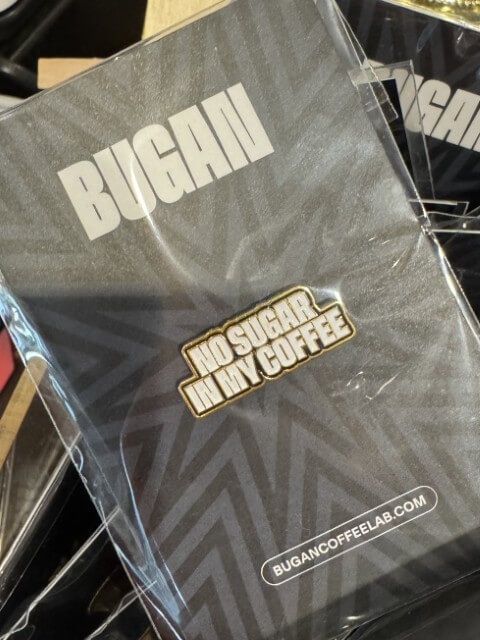
These guys take coffee seriously. There are signs all over the place, and badges for sale eschewing sugar in coffee. They offer various coffee courses and exciting coffee geek accessories (Italy leads the world in coffee equipment, unfortunately very few choose to put decent beans through it).
Caffeinated, content, and ever so slightly smug, we headed to the old town for some history, a view, and perhaps even some Moscato di Scanzo.
Bergamo Old Town
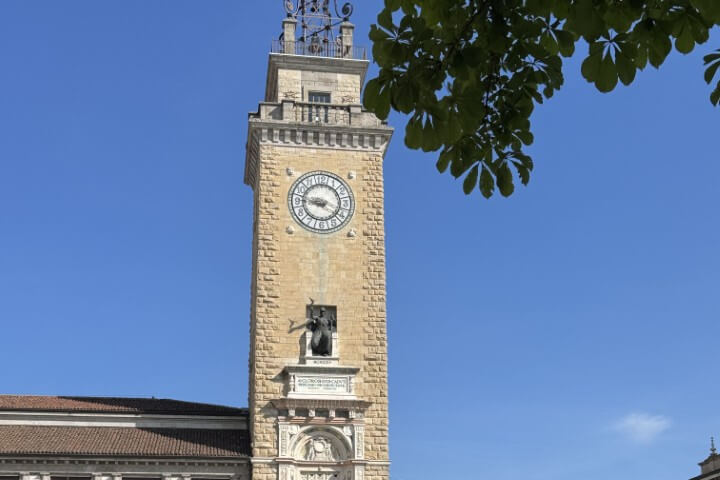
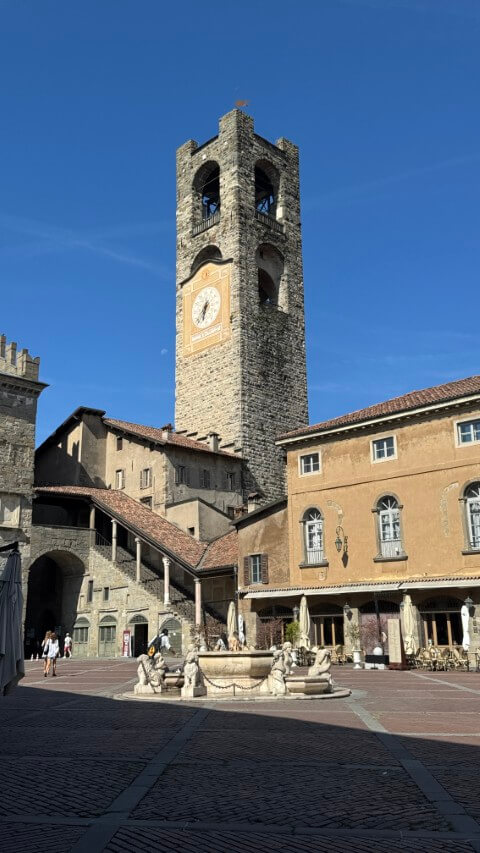
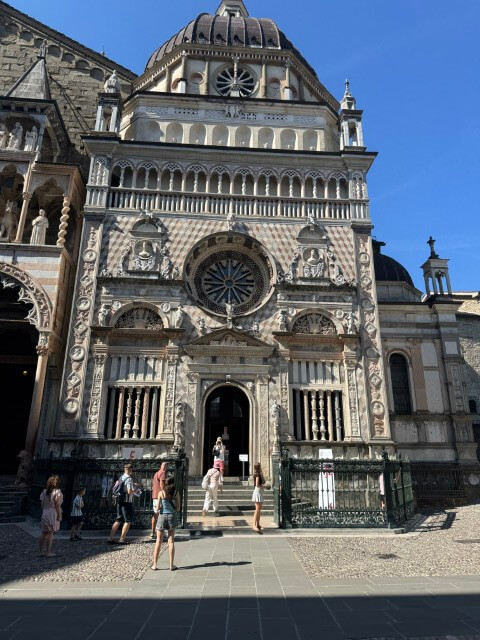
We walked to the funicular, past the fancy part “newer old part” of town and imposing Post Office, arriving before the queues, able to walk pretty much straight on to the next carriage. Reaching the top, we were faced with the choice of exploring blindly on foot, or taking the little tourist train. As good as the train tour looked, we opted for the foot option.
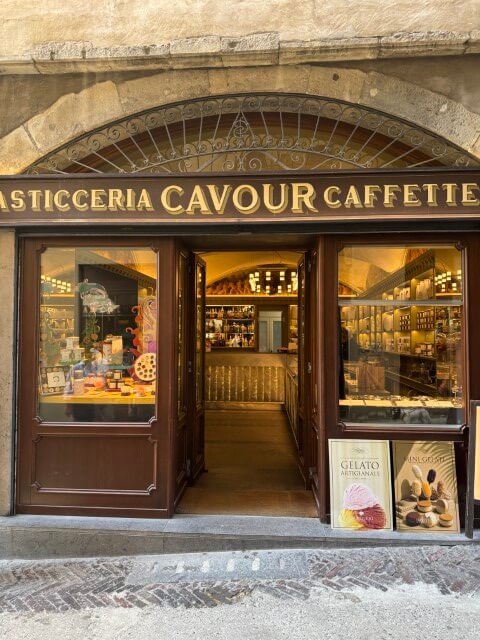
Wandering the street(s), we admired the buildings while the town woke up and businesses opened. The charming chocolate shop, Cavour 1880, was like something from Diagon Alley (Harry Potter). I would have loved to try a few of the truffles, but had no appetite for the richness of chocolate in the heat.
We took the opportunity to suss out lunch options, while I asked every waiter in town if they had any Moscato di Scanzo. I finally found it by the glass at Lalimentari, on the corner of the old square.
Lalimentari (map) – purveyor of Moscato di Scanza by the glass
I have often found that the complexity of any decision increases exponentially with the number of people involved. You can double that again if any of them are Puns. A group of Puns faced with a menu can make glaciers seem like they’re in a hurry. While our group deliberated upon every possible menu item, the staff had gathered behind us to watch a loud video on their colleague’s phone involving a lout PING every 5 seconds, so the eventual arrival of my apero was a godsend.
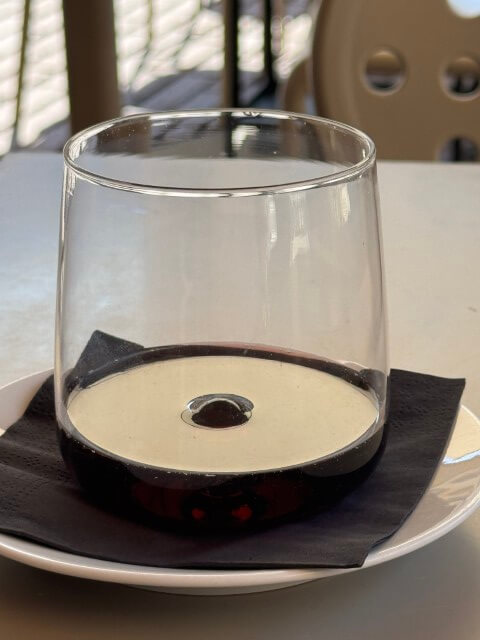
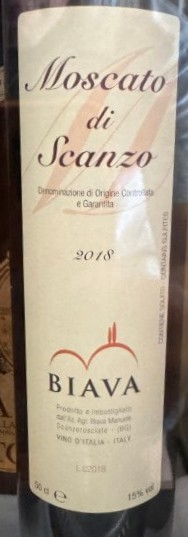
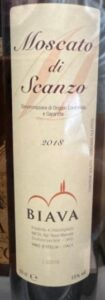
Moscato di Scanzo 2018, 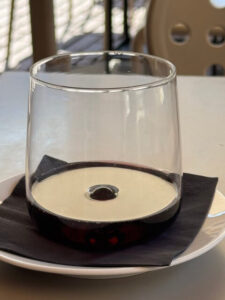 Azienda Agricola Biava: the smallest DOCG in Italy, made with the “rare” Moscato di Scanzo grape in a passito style. Intense black fruit aromas of cassis / blackcurrant, followed by balsamic herbs like dried sage / lavender / oregano giving it a pleasant smoky note. Like vermouth. Perfectly balanced.
Served in a stylish, stemless glass with a glass ball inside on the base that poked through the wine.
During our walk around, I had flagged an interesting wine (Incrocio Terzi grape) at a restaurant at the far end of town (/the street). Luckily daddy Pun had seen the “aircon” sign on door, so minimum arm-twisting was required.
This restaurant is a bit of a tardis. What seems small from the outside stretches right back and reveals an indoor dining room and a large outdoor courtyard, that most tourists seemed to prefer to the cooler interior.
Lunch was pleasant, but unmemorable, although I was primarily interested in trying a new grape.
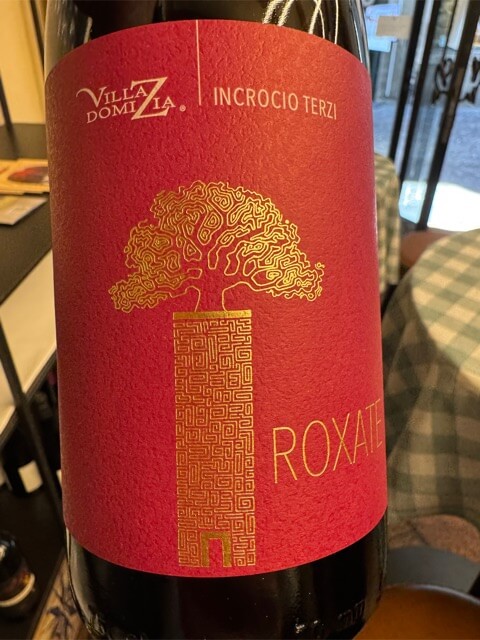
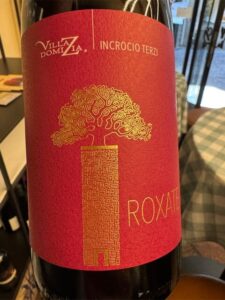 Roxate Incrocio Terzi 2023, Villa Domizia: a bit Cab Sauvy with fresher raw plum undertone. Quite present tannins (served from an automatic dispenser, so not fully aired, although served in a mini goldfish bowl). Fresh acidity. Dark forest fruit flavours. Drinks well at around 14-15 degC. I’d drink it more like a Spanish Garnacha than anything heavily oaked/extracted. Turns out it’s Barbera x Cab Sauv, hence the Cab Sauviness
We were able to catch the bus back from the old town, downhill to the apartment while the Puns planned another evening at the Chinese and I headed out to another wine bar on my shortlist.
Superbar
A low-key bar in an unassuming part of town. Having seen “Moscato di Scanzo” rosato on their menu on Google Maps, I thought I’d check it out. Although they had none by the glass, they did have it by the bottle (which I took home for the lads). I installed myself near the bar and worked my way through everything else on the menu, chilling out over my book (Jamie Goode’s The New Viticulture) while Amanda finished an early dinner with her parents, put them to bed and joined me to work through the rest of the wine list.
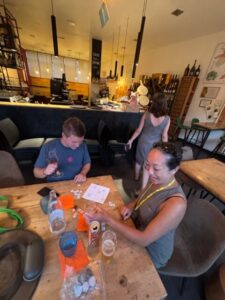 Back home, in neighbouring Maidenhead, a games café has opened up. It’s a great place to spend a few hours trying out new games and very uplifting to see families and groups of yoof having a wholesome screen-free experience rather than vaping, littering and playing crap music out loud on their phones (tongue firmly in cheek!). It is here that we discovered a fantastic game called boop. – basically cute kittens and cats being assholes. I made a rudimentary version with a sheet of cardboard and some home-printed out stickers on counters, that packed small for travel.
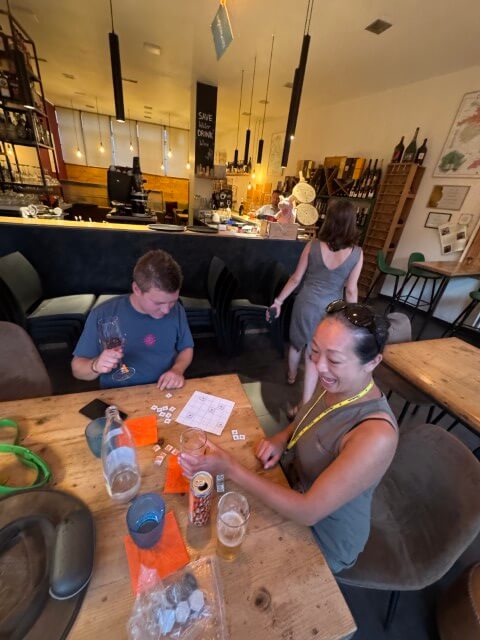
Away goes the book. Out comes boop.. As the evening progressed a local guy who was drinking at the next table had gained enough Dutch courage to speak to us in English and ask what we were playing. Of course we invited him to join us and set out explaining the rules. It was a novel role reversal to be the one being asked if it’s ok to take a photo (by his partner), and we played on as the outside tables and chairs were brought inside and stacked around us. Once again we ended up being the last to leave, wondering how the time had passed so quickly (something to do with having fun).
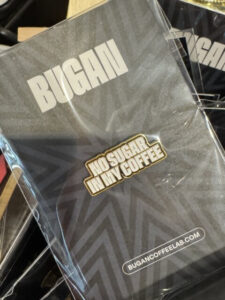 With our next stop, Como, only an hour away, we enjoyed a slow morning with another great coffee at Bugan coffee lab, feeling for the barista when an American tourist asked for her coffee to be “super hot”. I translated, noted the micro-expression of disappointment, explained to the tourist that it really wasn’t what “specialty coffee” places do, but she was adamant and the barista conceded. Before I left, I pleaded with her not to ask for sugar, and made a quick exit before I could witness her doing so.
Overall, a successful spot grape-wise with some new grapes found and tasted:
- Moscato di Scanzo DOCG
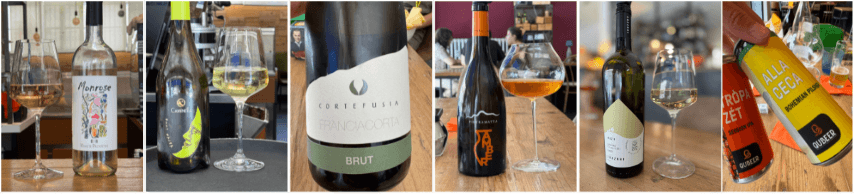
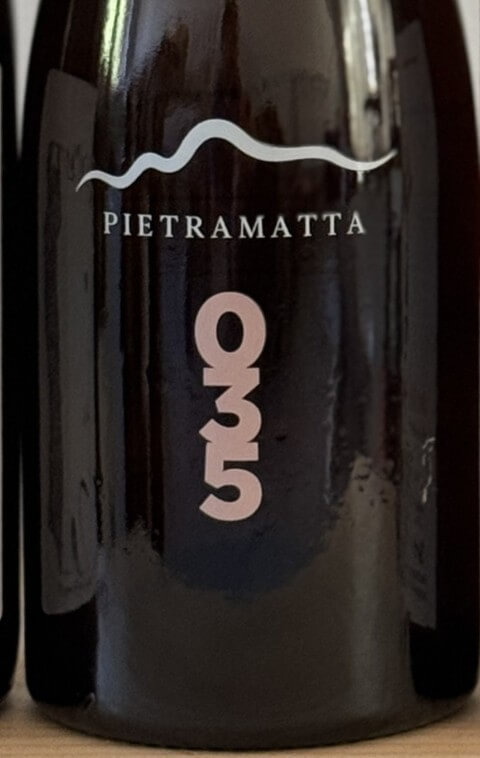
- Moscato di Scanzo Rosato (Pietramatta 035, brought home to share with friends)
- Molinara
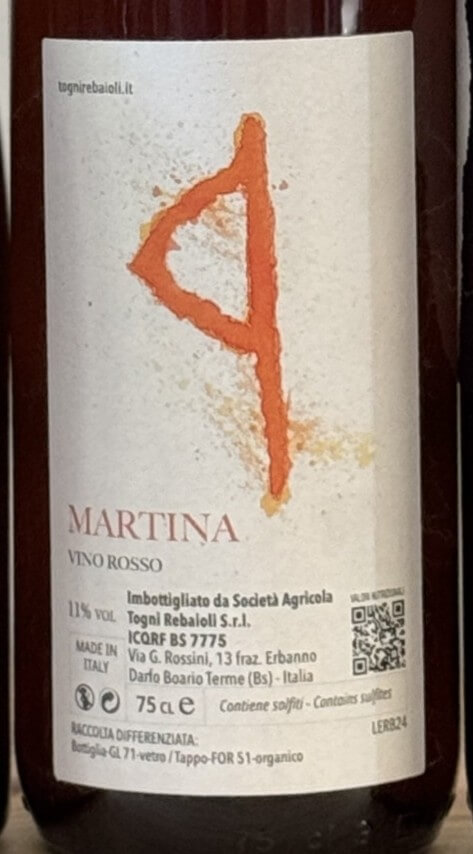
- Erbanno (Martina – bought but yet to taste – watch this space!)
- Incrocio Terzi
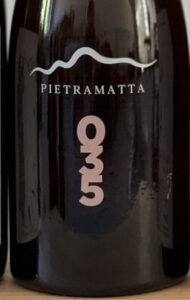
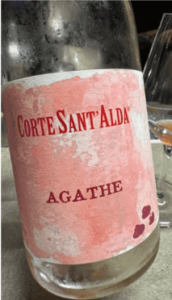
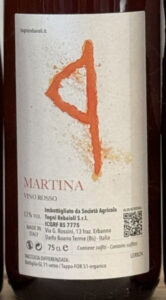
Next stop (part 5 of 6), Como, anAlpine lake close to Milan, with the famous Bellagio on its shores, and home to the lesser-known Verdese grape