No Comments
Domaine Takahiko
An excerpt from the book “JAPANESE WINE” available from Amazon and Wine Fogg.
Domaine Takahiko
An iconic winemaker, embracing Japan’s terroir and umami.
Established in 2010 by Takahiko Soga from a Nagano winemaking family (Obusé Winery)
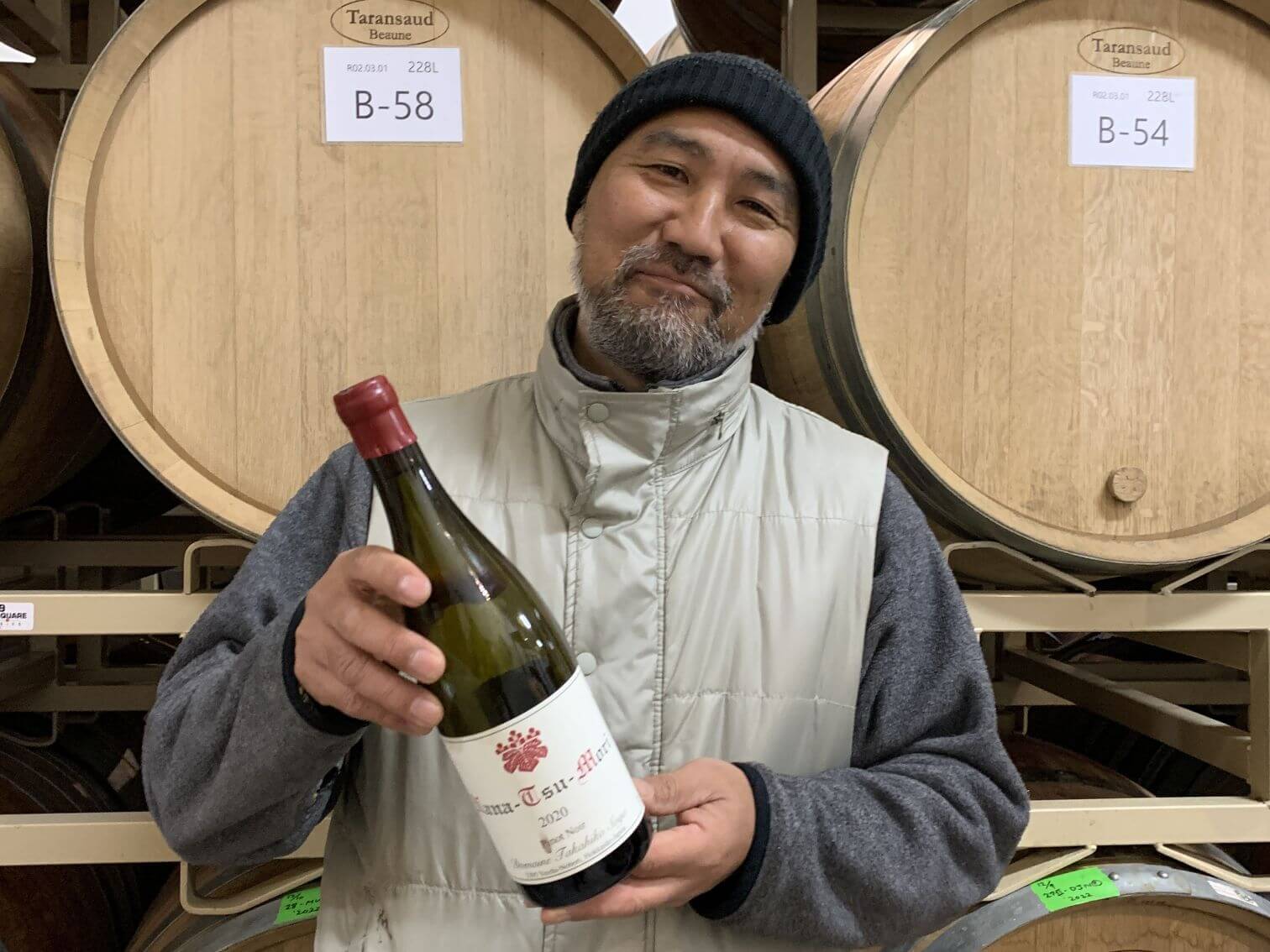
Domaine Takahiko’s “Nana-Tsu-Mori” Pinot Noir is perhaps the first international cult Japanese wine, and the most sought after, commanding eye-watering prices on the secondary auction market internationally since it appeared on NOMA’s wine list in 2020.
After graduating in fermentation sciences from Tokyo University of Agriculture and a three-and-a-half-year stint at their research lab, Takahiko joined Coco Farm (Tochigi) as cultivation manager. During his ten years with Coco Farm, he oversaw the switch of grapes from their Californian vineyards to 100% Japanese-grown grapes, a role that took him around the country and ultimately discover the quality of Hokkaidō’s grapes (particularly Kimura Vineyard’s Pinot Noir).
He worked alongside winemaker Bruce Gutlove (10R founder), who introduced his colleagues to a range of wines from around the world, increasing their curiosity and honing their tasting skills.
Takahiko firmly believes that great wine starts in the vineyard, but he felt far removed from the rest of the winemaking process at Coco Farm, so he decided to go it alone and establish his own winery. Discovering Kimura’s Pinot Noir gave him the confidence that high-quality Pinot Noir could be grown consistently in Japan, especially in Yoichi.
During his tastings with Bruce, he discovered a Poulsard by Pierre Overnoy, a wine with a savoury umami character reminiscent of his favourite Japanese broths; subtle yet layered, with breadth, depth, and a lingering flavour that spread across the palate.
At the time, most Japanese winemakers were focused on replicating international styles, but Takahiko was determined to create wines that expressed the Japanese climate and palate. It became his model for umami and balance. Instead of pursuing richness, power, concentrated fruit, and tannins, he chose to focus on delicacy, complexity, and lingering flavours.
While concentrated wines could be made by growing vines in pots or in greenhouses, protecting them from rain and controlling nutrition, this approach felt at odds with expressing Japanese terroir, flavours or sensitivity.
Japan is rich in nature. It also rains a lot.
It is a world away from the dry, hot climates of California. In fact, Hokkaidō is closer to Burgundy and Champagne in terms of temperature and rainfall. He made the brave decision to embrace the Japanese climate to truly reflect the land.
(Interestingly, Takahiko’s older brother was mentored by Usuke Asai of Château Mercian, who encouraged his students to produce wine that reflects Japan).
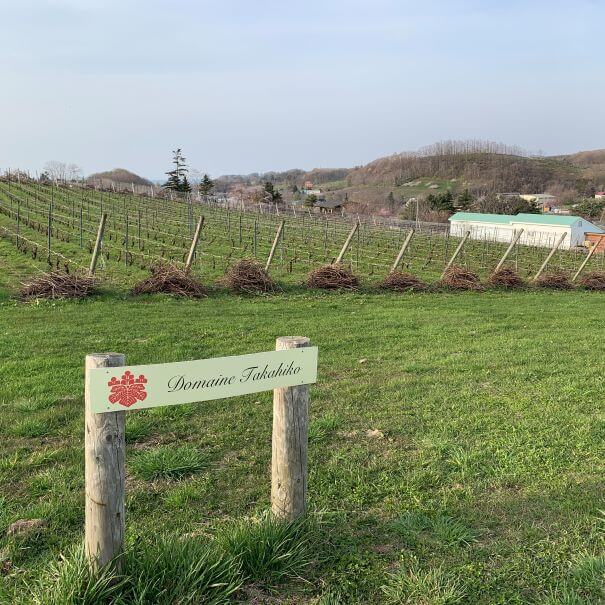
In 2008, he acquired 4.5 ha of land, planting 2.5 ha with 13 clones of Pinot Noir and naming the vineyard Nana-Tsu-Mori (“seven forests”) after the seven types of fruit trees that were cleared to plant the vines.
He studied for a year at Nakai Tourist Farm and opened Domaine Takahiko in 2010, becoming Yoichi’s second winery after Yoichi Winery.
All this was done on a budget of ¥10 M (approx. $70 k), a mere 5% of what large wineries would spend; IBCs are 10% the cost of stainless-steel fermentation tanks. The Hokkaidō climate is mild, and temperature control can be achieved naturally by opening doors or relocating the IBCs within the winery.
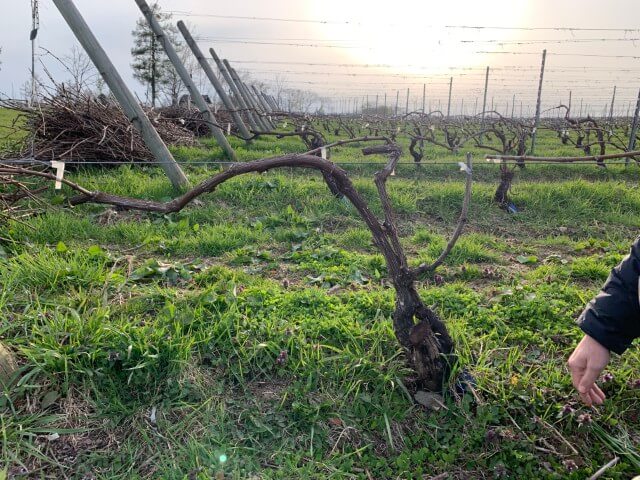
The vineyard has been managed organically from the start without chemical pesticides or fertilisers, and the vines are planted at an angle to help protect against snow damage over winter.
Although he experimented with biodynamic farming at Coco Farm, Takahiko ultimately felt that it was not so relevant to Japan, being
a European solution to European problems. Japanese are an agricultural society with an innate sensibility for such conscious farming
His vineyard contains volcanic soil with lots of clay, to which he attributes his wines’ savoury notes. High pH soil with a lot of organic matter, microorganisms and amino acids, he believes, increases the amino acid in the grapes and through to the wines. Interestingly, his team point out that the vines grow thicker and faster than in Europe, and the resulting wines also age quicker with tertiary notes appearing after 2–3 years.
The wines are produced with whole bunch fermentation and indigenous yeasts. Takahiko (like Bruce) believes that Japanese grapes are intrinsically subtle and benefit from the complexity of indigenous yeast, while avoiding filtration that could strip away such subtleties. Each clone is fermented separately and aged in 228-litre French oak barrels (8-10% new), blended before bottling, unfiltered without racking. No additives are used during vinification, including sulphur, which could “interfere with the microorganisms, putting them under excessive strain” with negative results.
Since 2015, the minimal sulphur that was used before bottling has been reduced as he doesn’t believe it is compatible with the delicacy of Japanese wine. Takahiko has a wonderful poetic description of his wines in terms of the seasons (paraphrased):
The wines develop and change every 2-3 years. When they’re young, they’re like spring – bright and fruity. In their summer, a balance of fruit and ripeness. Autumn brings humus and mushroom notes, and winter brings dryness and flavours of soy sauce. It is up to the consumer to decide when it is best for them to open the bottle.
Many journalists and wine importers who meet Takahiko hear about and publish articles on his journey, philosophy and globally acclaimed wines with “umami” featuring frequently and prominently. However, there is one important achievement that is under-reported, and it is much more local in nature.
Thanks to Takahiko choosing to establish a winery in a small town with a declining population, training apprentices and inspiring others to follow in his footsteps, he has helped with the regeneration of the Nobori district and the wider Yoichi and Niki wine industry. In 2010, he opened the second winery in Yoichi; there are currently 21, 10 of which are in Nobori. Whereas there were only two students in the local elementary school in 2017, there were over 20 by 2022. Rather than becoming a large-scale producer, Takahiko has chosen to remain an artisan family winery, focused on the long term.
His commitment to the region has paid off: attracting other winemakers and fostering investment has helped the local industry thrive. The local mayor (a supportive wine lover) estimates that this has resulted in double the tax revenue that a large winery alone would have generated.
Since 2013, Atsushi Suzuki, Atsuo Yamanaka (Domaine Mont), Lan Seqqa, Manabu Akagi (Lowbrow Craft), Mizuki Nakai and Yuichirō Yamada (Yamadado) have all apprenticed at Domaine Takahiko before establishing their wineries in Nobori.
Takahiko’s apprentice and Master Sommelier, Tōru Takamatsu, has started making his own wines at Domaine Takahiko since 2024 and may become the latest in the list of Takahiko’s protégés to establish his own winery.
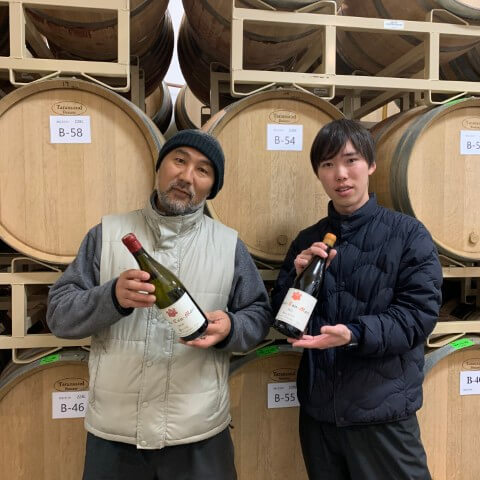 Takahiko Soga and Tōru Takamatsu
For me, Takahiko’s wines aren’t simply about the flavour or the rarity. To fully appreciate Nana-Tsu-Mori, I find it helps to keep all of the above in mind: the journey, the philosophy, the embracing of the Japanese climate, the umami, and the fact that he has led the way for others who followed, revitalising Nobori-chō and increasing the production and availability of Yoichi-Nobori wines for us all.
Domaine Takahiko produces around 10,000 bottles per year. The initial vintages (2008 – 2011) were produced from Kimura Vineyard’s Pinot Noir (labelled “Kyumura”) until his first vintage in 2012. (Nana-Tsu-Mori 2012 was vinified at his family’s winery Domaine Obusé in Nagano with production at Domaine Takahiko from 2013).
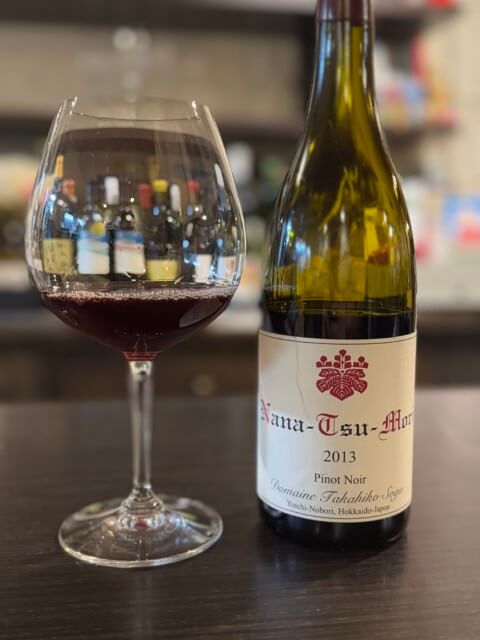
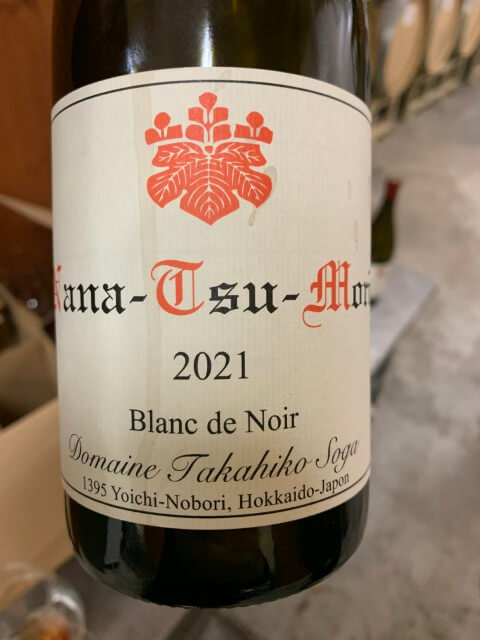
Until 2023, there have been two estate wines (labelled “Domaine Takahiko”), both bearing the name of the vineyard “Nana-Tsu-Mori”: “Pinot Noir”, and “Blanc de Noir” from 100% botrytised grapes that would otherwise have been thrown away. All other wines have been labelled as “Takahiko Soga” and produced from bought-in grapes as a négociant.
There was a special 2022 edition Yoichi Nobori “二” “Zwei”, “two” in Japanese and German), a blend commissioned and chosen by Riedel Japan was sold in a set of two. A collaboration of “2” parties, “2” grapes in a 50:50 blend, bridging two countries on two continents: Austria and Japan.
Following a difficult 2023 vintage where the effects of climate change were felt for the first time, Nana-Tsu-Mori grapes were released as “Yoichi-Nobori-N Passtetoutgrain” with 2% Zweigelt.
Takahiko and his team have made several minor changes to their vinification from the 2024 vintage, including temperature control, re-introducing minimal amounts sulphur before bottling, and expanding the “Domaine Takahiko” range to five Nana-Tsu-Mori cuvées:
- “Rosé de Noir” (the top cuvée)
- “Blanc de Noir”
- “Pinot Noir” (a cuvée from selected plots)
- Passetoutgrains (their second wine with up to 49% Zweigelt)
- “VINOP Rosé” (blended from various plots including experimental varieties at the Nana-Tsu-Mori vineyard)
Domaine Takahiko is not open to the public, and the wines are sold to distributors on strict allocation, subsequently rationed to wine bars and customers. Although some restaurants sell by the bottle, it is more common to find them at wine fairs (Japan and abroad) and in Yoichi and Sapporo wine bars.
His website lists local restaurants regularly serving Nana-Tsu-Mori.
For those wishing to see the vines, Takahiko has built an observation deck overlooking the vineyard. The exact location is what3words is ///beanpole.arena.diced
In 2025, an ageing cellar was completed beneath the NanaTsu-Mori vineyard, and a book has been published in Japanese about Takahiko’s journey, “Domaine Takahiko Struggle (Japan’s “Umami Wine” to the world)”.
www.takahiko.co.jp
www.facebook.com/takahiko.soga
www.instagram.com/domaine_takahiko