No Comments
Japanese Wines – an overview
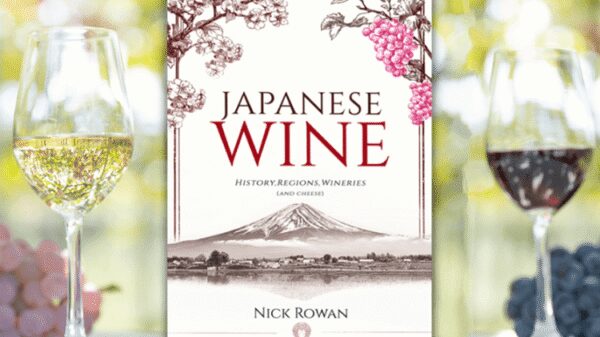
This article was written in partnership and commissioned by Weinkontor Sommer, a specialist wine importer in Germany, originally published on www.weinkontorsommer.de, with information taken from the book JAPANESE WINE by Nick Rowan.
Japanese Wines – an overview
Japanese Wines have long seemed impenetrable and exotic, with consumers unsure what to expect or where to find them.
Thanks to importers like Weinkontor Sommer championing Japanese Wine, they are now available in Germany, featuring on the menus of many top restaurants and directly from www.weinkontorsommer.de
After the fashion for heavy, extracted, high-octane wines, there has been an increasing trend for consumers looking for more authenticity, subtlety, finesse and lower alcohol, all of which are natural characteristics of Japanese Wine.
The first wines in Japan were made from the wild-growing Yamabudō (“mountain grape”) around 2,000-4,000 BCE.
The first grapes suitable for cultivation and winemaking arrived with Buddhism, along the Silk Road in the 8th century. The Buddha of Healing Medicine was the first form of Buddha that arrived in Japan, often depicted holding bunches of grapes, and for the following 1,200 years, grapes were considered medicinal and cultivated for this purpose.
Yamanashi
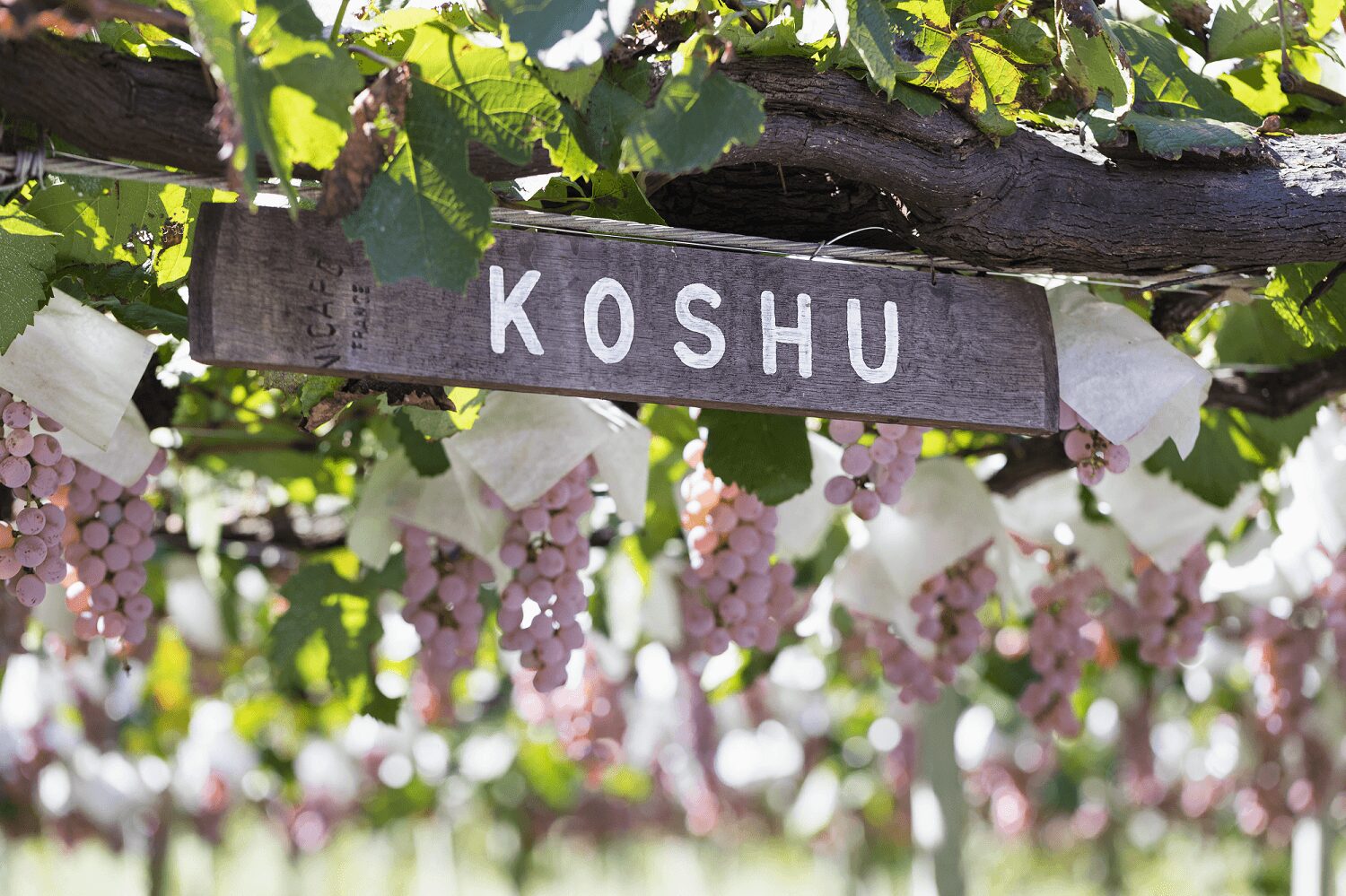
Kōshū was first cultivated at scale in Katsunuma in the Kōfu Basin, Yamanashi Prefecture (previously known as Kai Province or Kōshū, which gave its name to the grape).
Today, Yamanashi is the heartland of viticulture and winemaking in Japan, with Kōshū its signature white wine grape, and the hybrid Muscat Bailey A its signature red grape.
These are the most cultivated red and white wine grapes in Japan today, grown predominantly in Yamanashi, which has the country’s oldest wineries, largest number of wineries, and largest wine production.
For most of its history, Kōshū has been grown on large pergola vines which can span 50 m2 with 500 to 800 bunches per single vine. Bunches were grown for their visual appeal and sold in supermarkets as table (eating) grapes.
It was only in the late 1800s during the Meiji Restoration that winemaking was identified as a modern industry, and attention turned to Kōshū as a grape for winemaking.
Initial winemaking attempts were unsuccessful, compounded by the arrival of phylloxera and two world wars, after which imported North American rootstock and Vitis labrusca grapes dominated, used for the production of sweet wines.
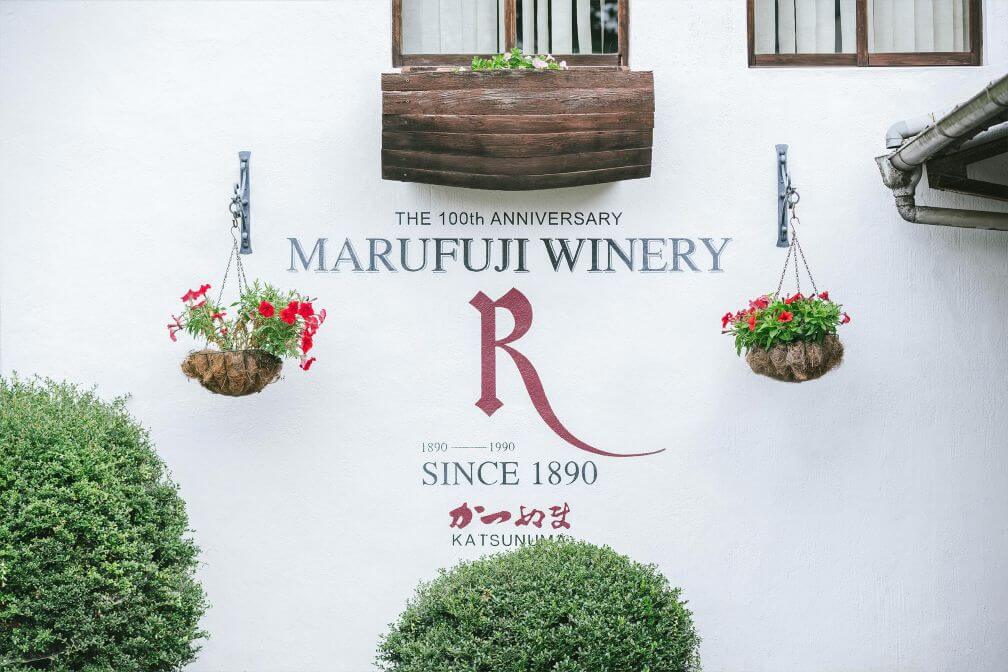
When European dry wines increased in popularity in the 1970s, Kōshū once again came under threat from cheap imported grape concentrate and wines. A group of visionary winemakers in Yamanashi, including Marufuji Winery, believed in the potential of Kōshū and invested in international collaborations and research to improve the quality.
Marufuji (Rubaiyat) Winery, one of the local producers that invested in Kōshū’s future.
In 2010 Kōshū was recognised by the OIV, allowing “Kōshū” wine to be sold in Europe, promoted by the “Koshu of Japan” organisation, and in 2013, GI Yamanashi became Japan’s first “Geographical Indication”.
Evolution of Kōshū
It took took decades for winemakers to discover and perfect the Kōshū styles available today.
At first, the focus was on improving the overall “flat” quality of the wines with must clarification and low temperature fermentation introduced.
“Sur lie” was developed by Château Mercian, adding more palate weight and body.
Next was the focus on the citrus character that can be achieved by early harvesting, or in the case of one of the largest and most iconic Kōshū producers, Katsunuma Jozo, by single vineyard Kōshū. Katsunuma Jozo’s Aruga Branca Issehara displays a natural citrus character that could easily be confused for a Sauvignon Blanc. This was the first commercial scale single-vineyard Kōshū, which is a flagship of the winery today.
During this journey of exploring the full potential of Kōshū, Katsunuma Jozo was one of the innovative wineries that experimented with cryogenically freezing the grape to concentrate the flavours. This process is still employed in their Katsunuma Jozo’s Aruga Branca Doce , one of the few sweet Kōshū produced today.
Further styles emerged with Sparkling Kōshū, such as Fujiclair’s Koshu Sparkling , a brut nature with 14 months on lees, and Orange Kōshū. It was in fact a Japanese Kōshū that was one of the first orange wines from outside Georgia to win an international award. Iwasaki Jozo (aka Honjyo Wine) is a heritage cooperative, making traditional styles of Kōshū while modernising their techniques and styles with an excellent orange Tokiwani-Moyuru Koshu 2022 with 14 days of skin contact.
Hokkaidō
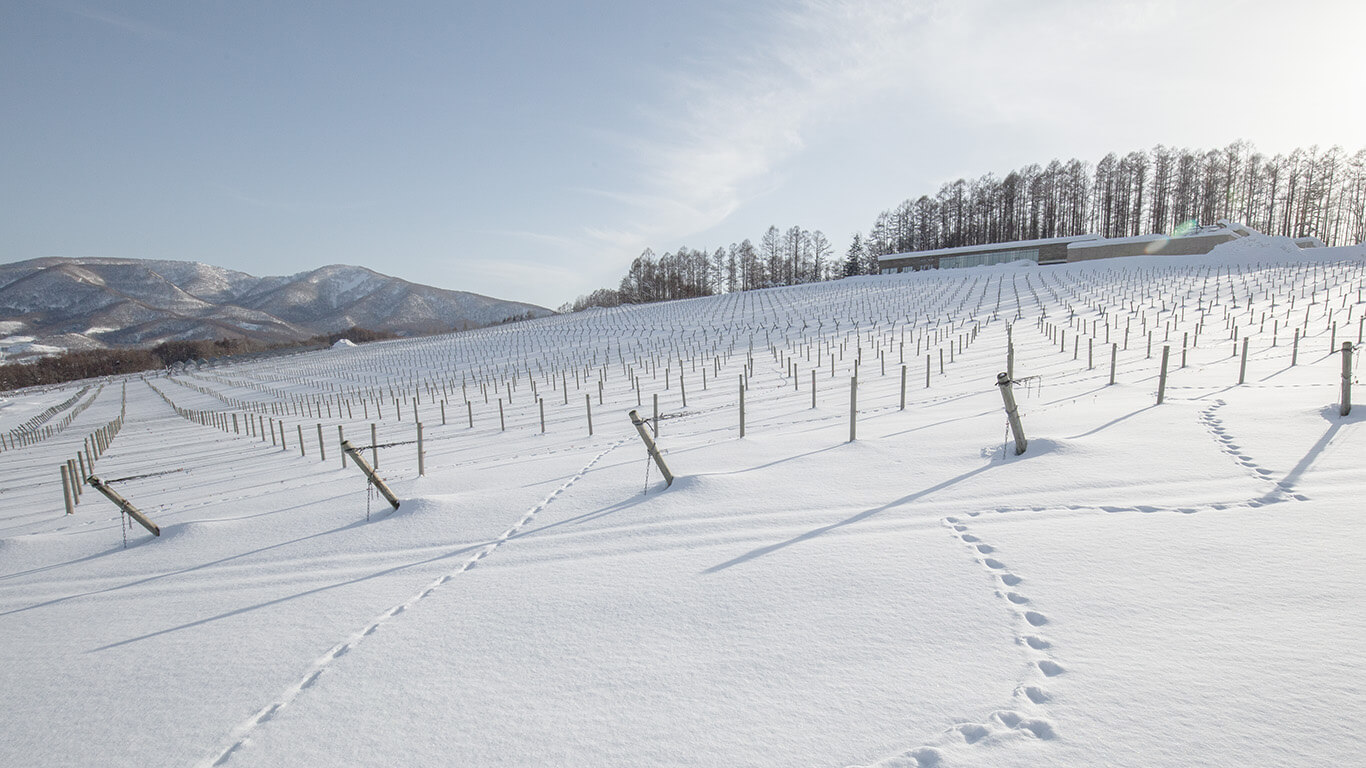
Hokkaidō has emerged as the most exciting wine region in Japan over the last decade, overtaking Nagano to become the second largest wine producing and grape growing region in Japan.
Takahiko Soga (Domaine Takahiko, Yoichi) and Bruce Gutlove (10R, Iwamizawa) paved the way for new wineries. Takahiko’s Nana-Tsu-Mori hit the global headlines and attracted further wineries that have revived the region’s industry and society.
Bruce opened Japan’s first “Custom Crush” facility for grape growers to produce their own wines, enabling small scale production, attracting many newcomers to start production before opening their own wineries.
Pinot Noir and Chardonnay are making waves in Hokkaidō, although its Zweigelt and Kerner are charming wines that are often overlooked.
Niki Hills was established by extreme adventurers (climbing mountains and crossing Antarctica) producing a range of premium Kerner such as the fresh and aromatic NIKI Hills Hatsuyuki .
Nagano
Nagano emerged as the second largest grape growing and winemaking region in Japan (until overtaken by Hokkaido in 2023).
There are five recognized “wine valleys” across two main regions.
Four of these are in the western region around Shiojiri City, Kikyōgahara where Merlot emerged as the signature grape in the 1970s, putting Nagano on the wine map in Japan and internationally a decade later.
Chikumagawa Wine Valley in the east of Nagano, along the Chikuma River (Chikuma-gawa) is one of the most dynamic regions in Japan with wine academies, many small wineries and “custom crush” facilities. Here premium Chardonnay is the reputation builder, particularly from the northern “Hokushin” region near Nagano City.
Further south (upriver), many small wineries are located around Ueda and Tomi cities growing a variety of grapes.
Pinot Noir and Petit Manseng are some rising stars across the Chikumagawa Valley.
Yamagata
Yamagata is located in the northeast of the main island, between Hokkaidō and Nagano.
Its cooler climate is the northernmost limit of Kōshū cultivation in Japan, however, it has more recently built a reputation for some of the highest quality Cabernet Sauvignon. Manufacturers from across Japan source their Cabernet Sauvignon grom Yamagata.
Takahata Winery is one of the largest wineries in Yamagata Prefecture, with ambitious plans to become one of Japan’s premium wineries, while minimising intervention in the vineyards and cellar. Their owner Hombo Shuzo has extensive beverage experience with premium whisky and their own wineries in Yamanashi and Nagano and has had the foresight to recognise Yamagata’s potential as a premium wine region.
Takahata Winery’s 2018 Zodiac Cabernet Sauvignon an example of one such Cabernet Sauvignon, a rare opportunity to find an aged Japanese Wine outside of Japan Their Prise de Mousse Chardonnay 2017 is an example of one of Japan’s premium traditional method sparkling blanc de blanc with 5 months maturation in French oak and extended, 48 months bottle fermentation.



Tags: 10R, Fujiclair, Hokkaido, Honjyo Wine, Iwasaki Jozo, Japanese, Japanese Wine, Katsunuma Jozo, Koshu, Lumiere Winery, Nagano, Takahata Winery, Takahiko, Weinkontor Sommer, Yamagata, Yamanashi